

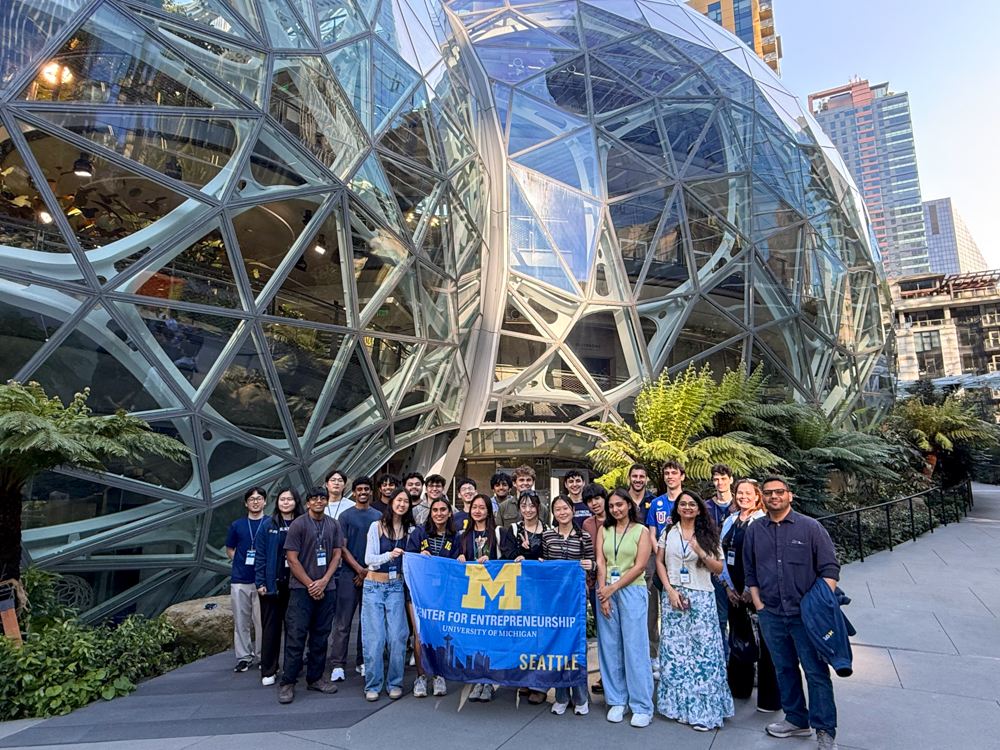
Reflections from the Center for Entrepreneurship Seattle Trek
For University of Michigan students Somya Valecha and Angelo Hawa, the Center for Entrepreneurship’s Seattle Trek offered more than a glimpse into a thriving startup ecosystem. It showed them how entrepreneurship takes shape across industries, personalities, technologies, and communities.
Somya, a junior studying Computer Engineering with a minor in Entrepreneurship and a member of PJTL Air & Space, and Angelo, a PhD student in Mechanical Engineering and part of the Entrepreneurial Leadership Program, came to Seattle with different academic backgrounds. But both left with a clearer understanding of what it means to build something new, and how many different paths can lead there.
Learning from Entrepreneurs Up Close
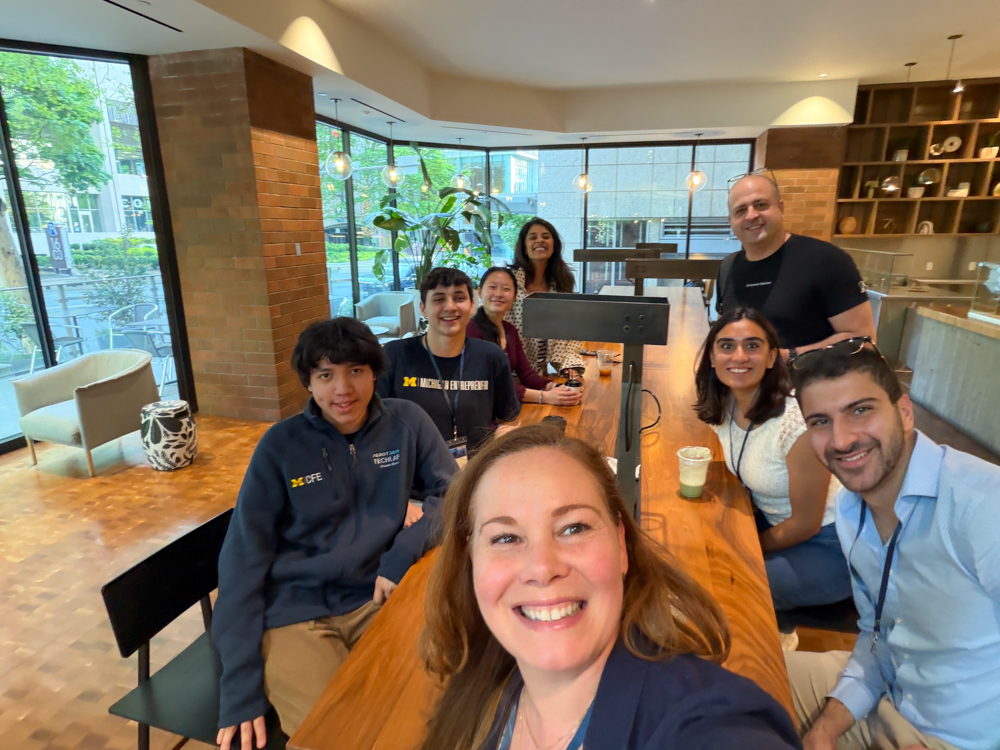
One of the most memorable parts of the trek for Somya was the opportunity to sit down for coffee chats with Seattle entrepreneurs Ambika Singh and Noam Schafer. Having close-up conversations with real founders made entrepreneurship feel more personal, honest, and accessible.
“It showed me that entrepreneurs have very different journeys,” Somya reflected. “Entrepreneurship is about resilience, grit, and learning from failure more than it is about getting everything right.”
Although both Ambika and Noam began their careers at Microsoft, their entrepreneurial paths unfolded in very different ways. For Somya, that contrast was reassuring. It reinforced the idea that there is no single “correct” journey into entrepreneurship.
“It encouraged me to trust myself and my own path forward,” she said.
The coffee chat also offered a live example of how naturally entrepreneurs connect with and support one another. During the conversation, Ambika and Noam even discussed a potential collaboration, with Ambika noting that her clothing company could benefit from the computer vision technology Noam’s company works on.
For Somya, that moment captured something essential about startup communities: ideas grow stronger through relationships.
Seeing Startup Thinking Beyond Traditional Startups
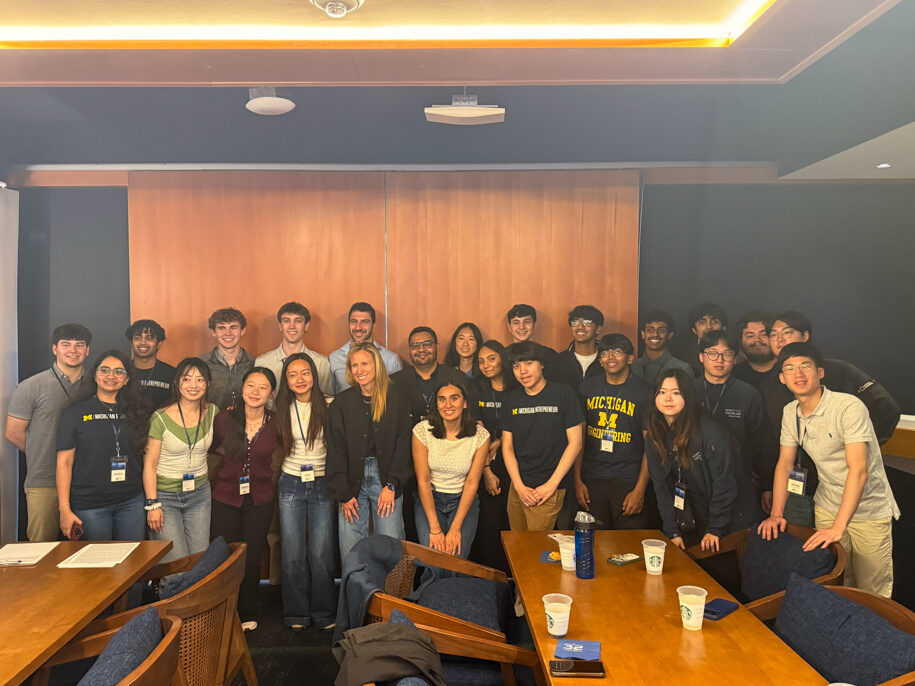
The trek also challenged students to expand their definition of entrepreneurship. A visit with the CEO of the Seattle Kraken, paired with ice skating at the team’s arena, showed how entrepreneurial thinking can apply far beyond software or product startups.
Somya was struck by the idea that building an NHL team from the ground up could be viewed much like launching a startup.
“The talk taught me how the entrepreneur and startup mindset is applicable in so many industries and projects,” she said. “Skills like finding the right team, building a team and company culture, and staying innovative are crucial to succeed in any venture.”
Students also learned about the Kraken’s commitment to sustainability, including its home at one of the most sustainable hockey arenas in the world. Somya noticed details like bins for collecting Starbucks cups for reuse, reducing plastic waste. She also appreciated the CEO’s emphasis on building a positive relationship with the local community.
The visit showed that entrepreneurship is not only about launching something new. It is also about building intentionally, creating culture, and considering the broader impact on people and place.
From Batteries to Space to Consumer Tech
For Angleo, the trek provided a real-world perspective on what entrepreneurship looks like in a startup-friendly city like Seattle. Through company visits, founder conversations, and alumni stories, he saw many of ELP’s ideas come to life.
“Hearing directly from people at places like Pioneer Square Labs, Stoke Space, Emerald Battery Labs, Wyze, and the Seattle Kraken made the startup process feel more tangible,” he shared.
Across these visits, Angelo saw how passion projects, technical ideas, and personal interests can grow into real companies when paired with the right market opportunity and strong execution. The experience connected classroom concepts to real entrepreneurial decision-making.
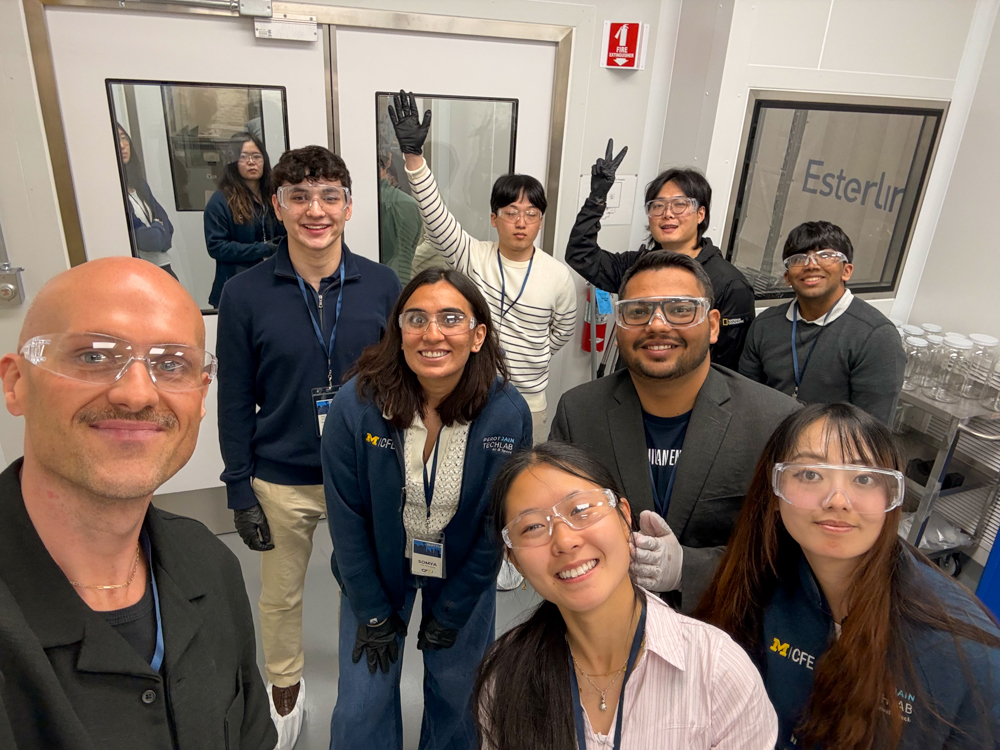
At Emerald Battery Labs, students explored a highly technical and innovative environment focused on the future of batteries and energy technology. Somya was impressed by the lab’s sophistication, but one of her biggest takeaways was less about the equipment and more about the mindset.
The team encouraged students to question assumptions and think critically about what they read regarding the future of batteries and energy. That lesson resonated across the entire trek: entrepreneurship requires curiosity, skepticism, and a willingness to keep learning.
Somya also appreciated how authentic and honest the entrepreneurs were throughout the experience.
“Every entrepreneur we met had a very different personality and leadership style,” she said. “That made the experience feel very real and human.”
Michigan Alumni and the Power of Possibility
Alumni conversations were another highlight of the trek. For Angleo, hearing from Michigan graduates in entrepreneurship, investing, and company leadership helped illuminate the many possible routes into the startup world.
“The alumni conversations were especially valuable because they showed different paths into entrepreneurship, investing, and company leadership,” he said.
Somya felt that same sense of possibility during a visit to Bruce Wanta’s Collector Garage. She described Bruce as incredibly down-to-earth and welcoming, and she was inspired by his story of going from a Michigan student to the CEO of Spectrum Controls.
“His story showed us what’s possible for our futures as Michigan graduates,” she said.
For both students, these alumni stories made entrepreneurship feel not like a distant dream but a real, attainable path — one that can begin with the skills, networks, and curiosity developed at Michigan.
A City Built on Connection
Beyond the company visits and founder conversations, Seattle itself became part of the learning experience. Somya described it as one of her favorite cities, citing its walkability, scenery, and close-knit startup community.
One evening, she rode the Ferris Wheel with other trekkers and saw an incredible view of Mount Rainier at sunset. Another highlight: dinner at Din Tai Fung, which she described simply and enthusiastically as “amazing.”
But what stood out most was the sense of connection across the city’s entrepreneurial ecosystem.
“From incubators to founders, everyone seemed connected and supportive of one another,” Somya said.
That spirit of connection reinforced one of Angelo’s biggest takeaways from the trek: entrepreneurship is not just about having a good idea.
“It also depends on relationships, storytelling, persistence, and learning from the market,” he said.
Bringing the Lessons Back to Michigan
The Seattle Trek gave students a firsthand look at how ideas become companies, how founders navigate uncertainty, and how communities support innovation. From coffee chats with entrepreneurs to visits with battery labs, space companies, consumer tech startups, alumni leaders, and even a professional hockey team, the experience revealed entrepreneurship in many forms.
For Somya, the trek was a reminder to trust her own path and embrace the resilience required to build something meaningful. For Angleo, it made the entrepreneurial process more tangible and showed how technical ideas can become real companies through execution, relationships, and market learning.
Together, their reflections point to a larger lesson: entrepreneurship is not one story, one personality type, or one industry. It is a mindset, one that’s built on curiosity, grit, collaboration, and the courage to begin.