

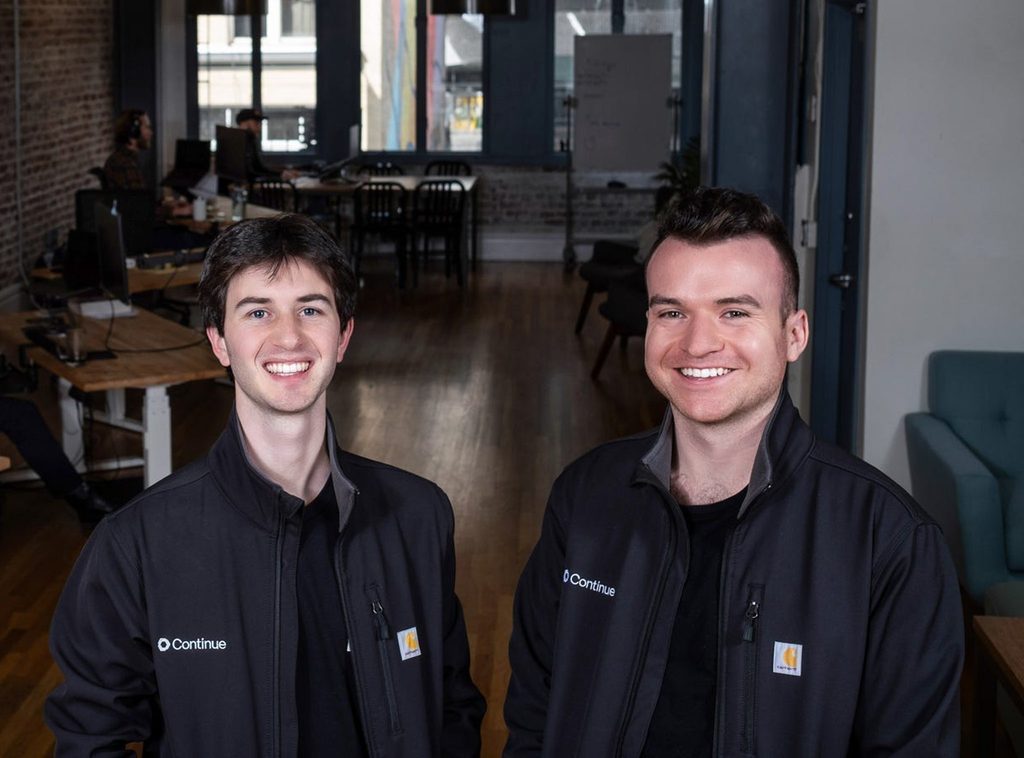
Ty Dunn’s plan to arrive at senior prom by helicopter never got off the ground, but his entrepreneurial journey did.
When Ty learned that prom would take place in Sterling Heights, about 45 minutes from his hometown of Clarkston, his classmates began making transportation plans.
“Everyone was going to get a party bus. I joked that we should get a helicopter,” he recalls.
The idea could have ended there. Instead, Ty sent a letter to Dan Gilbert, co-founder of Quicken Loans (now Rocket Mortgage), asking to borrow his helicopter.
The outreach did not result in a helicopter ride, but Ty did receive an unexpected reply.
“They said, ‘We don’t have a helicopter, but we think you’re bold and creative. What are you doing this summer?’”
With one letter, Ty had secured his first internship at 17, while still in high school.
Early Entrepreneurship
Ty’s quest for a helicopter wasn’t his first attempt to turn an idea into reality.
“I had started a non-profit, a TEDx event, so many things at my high school,” he says. “I just kept starting things. I love having an idea and making it a reality. I get joy from trying things and seeing if I can make a change in the world.”
His internship at Quicken Loans gave him an early glimpse of how that instinct could translate into a career. Ty saw how software could take an idea and expand its reach, as when Dan started with just a web form on a site and turned it into the second-largest mortgage lender in the US.
Finding ELP
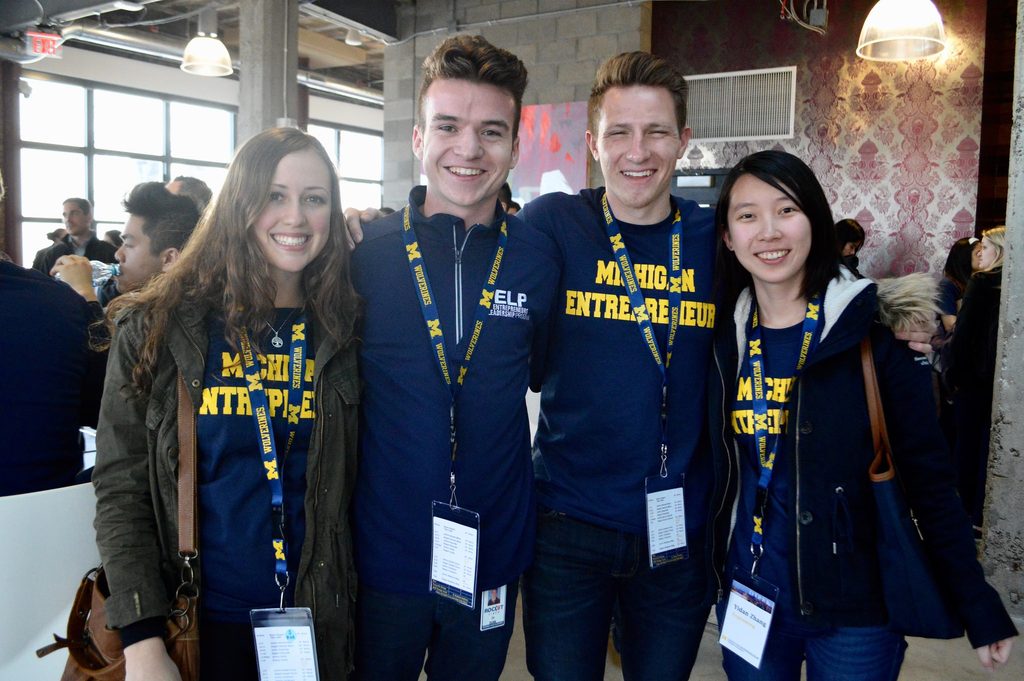
Soon after arriving at the University of Michigan, Ty visited Festifall, where he met Matt Gibson at the Center for Entrepreneurship’s table.
Ty was interested in building something of his own, but he was initially skeptical of entrepreneurship education.
“I told him, ‘I don’t think you can teach entrepreneurship,’” Ty says.
But after hearing Ty’s helicopter story, Matt encouraged him to apply to the Entrepreneurial Leadership Program, telling him it would be different than what he expected. Ty gave it a shot and applied to join the program’s first cohort.
“He really sold me on the ELP program,” Ty remembers. “There was the opportunity to meet startup founders in the Michigan network and work on real projects with a select group of other students who also wanted to be founders.”
ELP didn’t teach Ty to be curious. It gave his curiosity structure, community, and momentum.
The First ELP Cohort
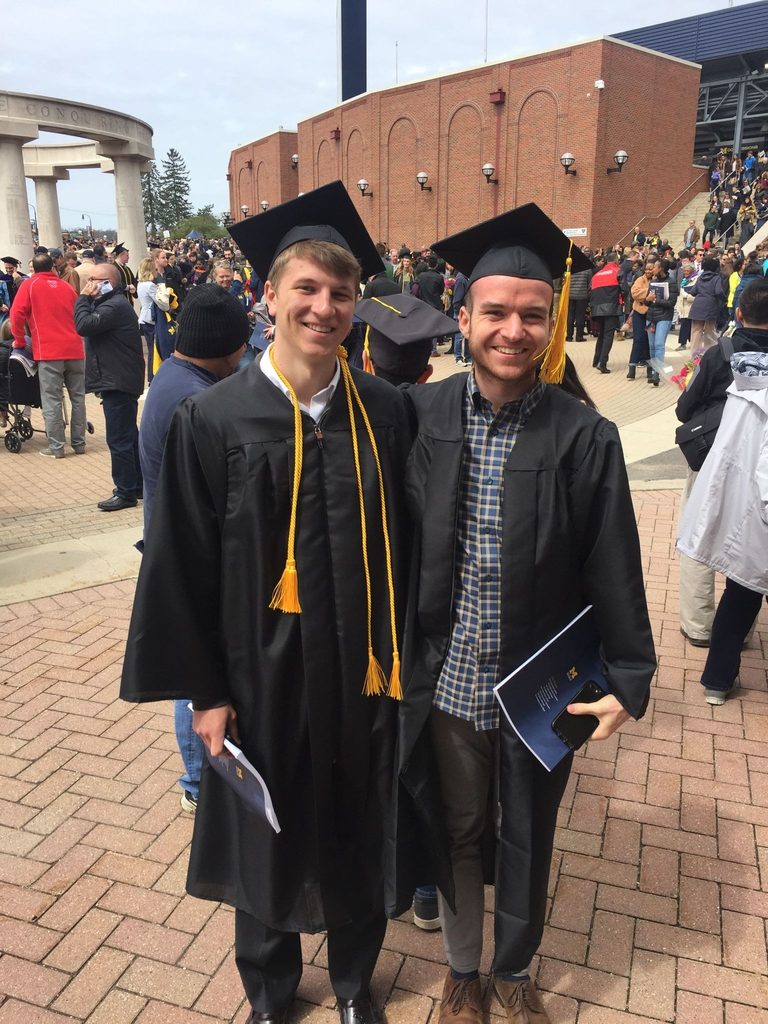
Ty joined ELP as one of only two first-year students in its inaugural cohort. He later returned as an instructional aide for the program’s second and third cohorts, helping shape the experience that had accelerated his own journey.
When Ty looks back on that first year, he thinks less about individual assignments and more about the people he met and what they built together.
One friendship began when a classmate, Joe Saginaw, told Ty he wanted to build a tiny house. 10 years later, Ty would spend fifteen weekends helping Joe finally build that carbon-neutral home.
That friendship also took Ty and Joe across the world. With support from CFE, the two students created an AI-focused mini-trek to Beijing and Shanghai, with help from a third ELP 1 student, Ziqi Guo, who lived in China.
Those experiences captured what made the first cohort special. Students weren’t simply talking about startups. They were experimenting, taking action, and encouraging one another to try something new.
A decade later, those relationships remain an important part of Ty’s life.
“Those relationships compounded for me,” he says. “So many of us keep in touch.”
That network followed him beyond Ann Arbor. When Ty moved to San Francisco without knowing many people, ELP instructor Jeff Schox invited him to spend time at his office and helped him find a sense of community.
“ELP gave me a starting point in San Francisco that I wouldn’t have had otherwise,” Ty says. “Friendship and mentorship have molded me into the person I am today”
Learning to Lead
ELP also challenged Ty’s understanding of leadership. He remembers a class on radical candor taught by Tom Frank, a former CFE director who helped launch ELP. One lesson stayed with him.
“He taught that when you’re managing someone, if you solve their problems for them, they’ll never learn to solve their own problems,” Ty says.
As a natural self-starter, Ty was used to pursuing an idea and doing whatever it took to make it happen. He learned that effective leadership required something different: creating an environment where others could develop their own solutions.
It also meant knowing when to ask for help.
“If you want to be successful, you’ve got to get help from other people,” Ty says. “You can’t do it all alone, and that’s a really hard thing for founders like myself. You need the confidence to be fiercely independent in order to get started, but to succeed, you have to be really good at working with other people.”
That lesson became especially important as Ty began building and leading his own team.
Following His Curiosity into AI
At Michigan, Ty studied Cognitive Science, focusing on the intersection of language and computation. He became interested in conversational AI and how people interact with technology.
“Previously, software required the user to adapt,” he says. “But with Conversational AI, there was an opportunity for software to adapt to the user.”
Traditional software asks users to learn its rules and workflows. Ty saw the potential for AI to reverse that relationship, allowing people to communicate what they wanted naturally and letting the technology adapt in response.
His interdisciplinary education taught him to translate ideas across philosophy, science, and technology and to examine problems from multiple perspectives.
“The skill set of doing that translation and having a deep understanding of a problem—all of those factors came together to get me my first job,” he says.
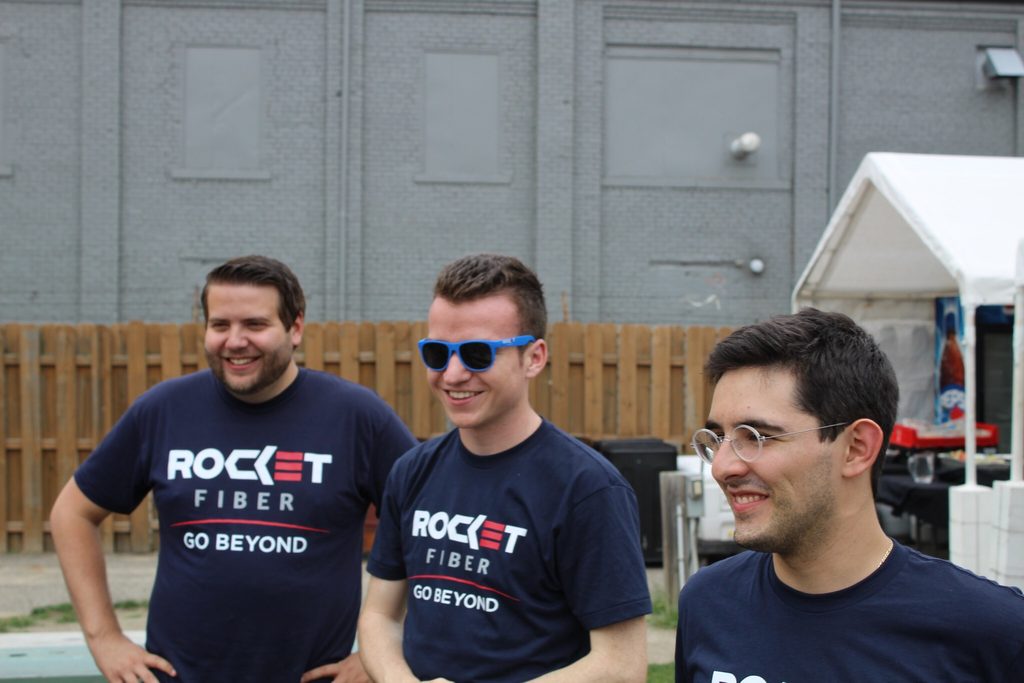
In his early work at Rasa after college, Ty began exploring the technology that would eventually power tools like ChatGPT. He saw how AI models could accelerate you by translating intent into action, with coding as a natural starting point.
“It was clear at that point that the models would become able to translate between English and code really well,” Ty says. “And I believed there was so much more software we could build, so I thought that would be the starting point.”
The technology showed promise, but existing tools were not easily customizable or fully integrated into developers’ workflows. Ty saw an opportunity to close that gap.
Building Continue
The problem to solve emerged as Ty and his co-founder began using GitHub Copilot and later ChatGPT in their own work.
Both tools were powerful, but using them together created a fragmented experience and could not be customized. Developers had to copy and paste information between tabs, interrupting their work, while adapting to the tools rather than adapting the tools to how they work.
“We were heavily using both Copilot and ChatGPT to build software,” Ty recalls. “We were like, ‘This is amazing. This is totally the future, but we want to push it to its limits.’”
They identified two problems: the tools did not exist directly where developers worked, and they were not sufficiently customizable to meet every team’s needs.
Rather than waiting for someone else to solve those problems, they built a solution for themselves. That solution became Continue, an open-source AI coding platform designed to help developers create and use customized AI coding agents.
“The original problem was our own problem,” Ty says. “We solved it for ourselves in a way that we loved.”
The next question was whether other developers felt the same way.
While participating in Y Combinator, Ty began reaching out with a simple question: “Do you use ChatGPT while coding?”
If the answer was yes, he asked for a 10-minute conversation. Instead of delivering a lengthy pitch, Ty learned how developers worked, where they encountered friction, and whether Continue could help.
About 20 friends became enthusiastic early users. The team then shared the post on Hacker News, where it reached the top of the front page.
“From there, it just kept getting bigger and bigger,” Ty says.
Continue eventually reached developers worldwide and was acquired by Cursor, now part of SpaceX, in June 2026. Yet the milestone Ty values most is not the acquisition itself. It is the community that formed while his team built something together.
The Relationships Behind the Work
“Relationships are the number one thing for me,” Ty says.
Recently, one of Continue’s founding engineers asked for his address to invite him to his wedding. To Ty, the moment represented a friendship that formed while navigating uncertainty and solving difficult problems together.
It’s the same pattern he experienced in ELP: build something with other people, invest in those relationships, and the impact continues long after the project ends.
“We were able to build something super cool and help people,” Ty says. “People around the world used Continue to accelerate their journey and grow as software engineers.”
Follow Your Curiosity
Ty’s advice for Michigan students begins with the same quality that inspired him to ask for a helicopter: curiosity.
“Follow your curiosities,” he says. “Even if you don’t feel like they’re going anywhere, let the inclination take you. Try new things. Let it unfold.”
That approach has carried Ty from a bold letter at 17 to ELP, an AI startup, and a community of collaborators and friends. Each step began with paying attention to what interested him, and then actually doing something about it.
For students, that next step doesn’t have to be launching a company. It could be asking a question, testing an idea, meeting a future collaborator, or taking an ENTR course. The helicopter may never arrive, but acting on the idea could still take you somewhere you never expected.