


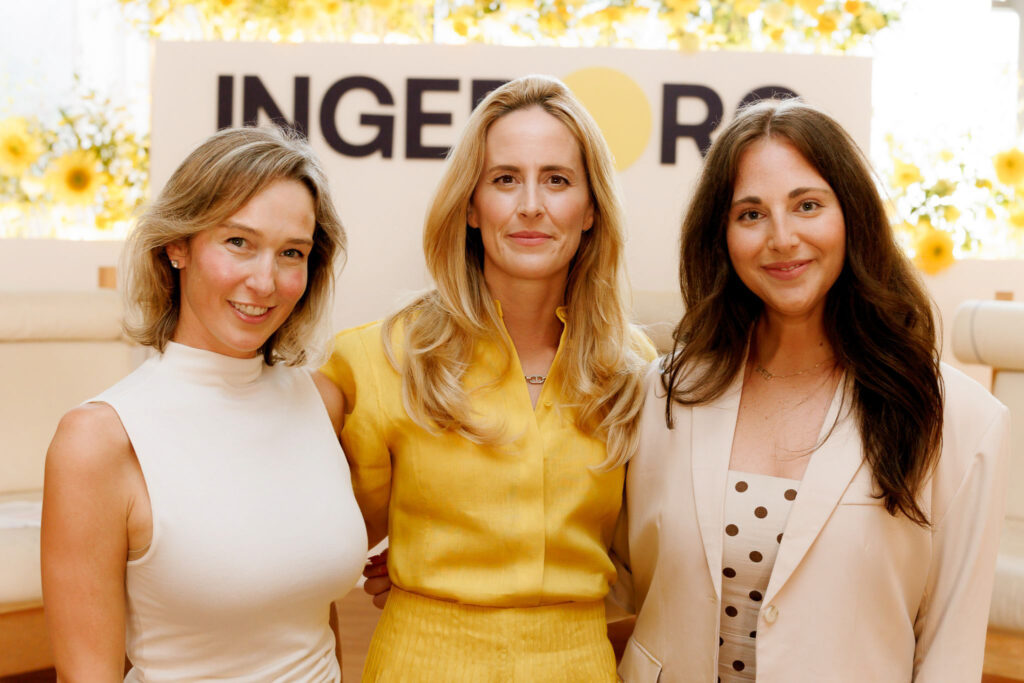
When Mira Kaufman arrived at the University of Michigan, she didn’t know venture capital existed. Today, she’s a venture leader focused on changing who gets funded. Mira’s path from curious first-year student to Vice President of Investments at Ingeborg Investments may not have been in her initial plans, but she’s right where she wants to be.
When Mira arrived on campus as a freshman, startups and venture capital were not on her radar. “I didn’t know VC existed as an industry or what it was,” she recalls. While studying at the Ross School of Business and participating in the MCSP learning community, Mira was still finding her footing on campus. Then, an optiMize presentation introduced her to social entrepreneurship.
“I didn’t totally know what that meant,” she explains, “but I started to do research on the concept. It took me down a rabbit hole into everything entrepreneurship.”
Mira was hooked. Through the business school, optiMize, and other campus communities, she began seeking out every opportunity she could find. She attended pitch competitions, met student founders, and started to notice the people evaluating ideas from the other side of the table.
Eventually, one question began to guide her curiosity: “Who decides if the idea is good or not?” Looking around the room, she realized many of those decision-makers were investors. Without realizing it at the time, Mira had found her way to venture capital.
Finding ELP
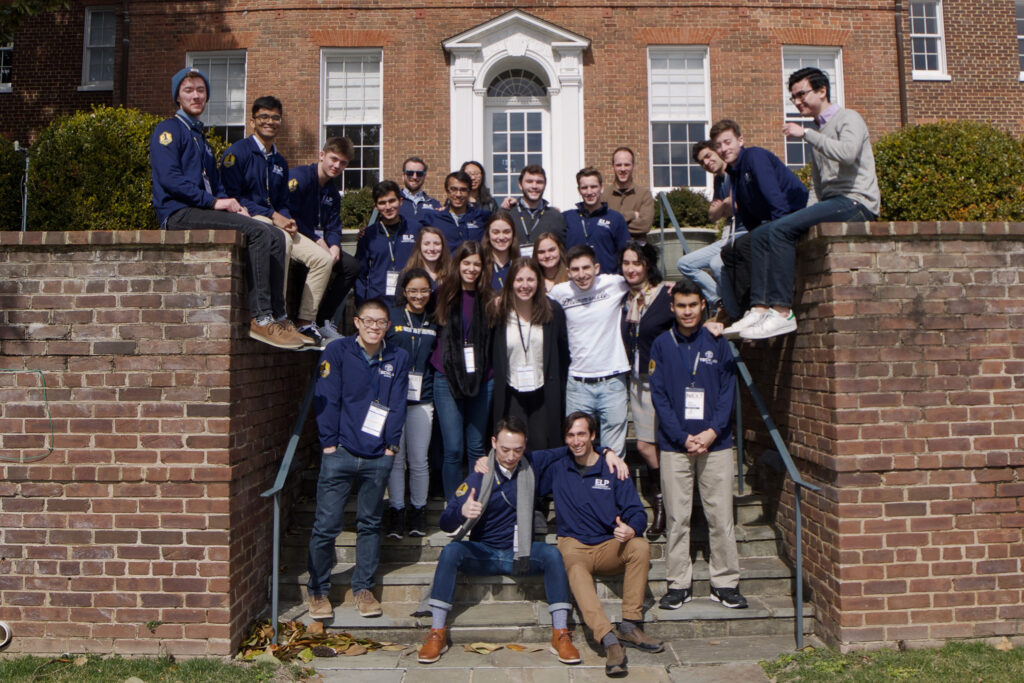
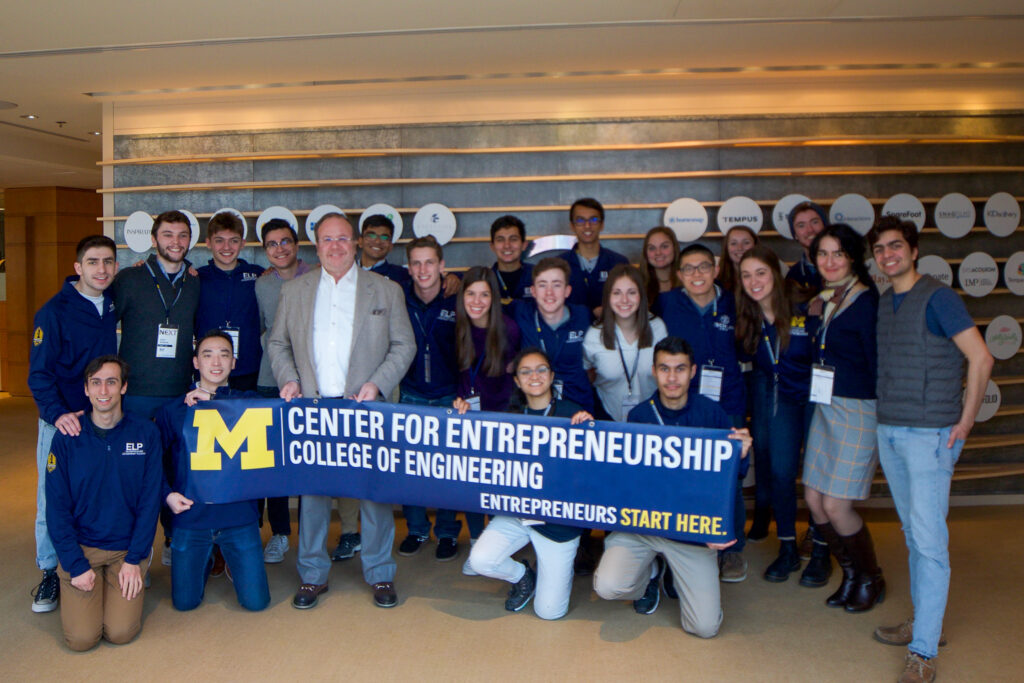
As Mira continued exploring entrepreneurship at Michigan, she started meeting students involved in the Center for Entrepreneurship’s Entrepreneurial Leadership Program. The people drew her in first.
“First and foremost, smart people that I met on campus were doing it,” she says. “That’s always an amazing sign of a powerful community, when you meet people who are part of it, and they inspire you.”
Once she learned more about the program, the structure and flexibility stood out. ELP offered her a way to explore her own interests while surrounded by peers, mentors, and entrepreneurial thinkers.
“As I got a sense of the programming, structure, and flexibility for students to explore an idea of their own in a slightly more structured way, I felt like it was going to be a really helpful community to pull from,” Mira says.
Learning the Language of Startups
Mira describes her path into venture as “a bit nontraditional.” She was discovering the startup ecosystem organically, which meant teaching herself the terms, the players, and the skills needed to understand how the industry worked. ELP helped accelerate that learning.
“Within ELP, I was given a community of like-minded people who had a shared interest to explore those questions with and bounce ideas off of,” she says. The program also gave her access to opportunities she may not have known about otherwise, from startup experiences to venture fund visits and conversations with industry professionals.
“Having the stamp of ELP early on to get my foot in the door at places that I wouldn’t have known about otherwise that early in my career was really helpful,” Mira reflects. “It created an environment where I could get to the right answers as fast as possible.”
One ELP experience that proved especially valuable was interning at a startup through the program. It helped Mira understand how founders think, how startups operate, and how to communicate with entrepreneurs, all skills she would later use as an investor.
Full-Circle Moments
Some of Mira’s most memorable ELP experiences have only become more meaningful with time. Through a CFE trek, she visited the very first venture fund she had ever stepped inside. Years later, that early exposure came full circle.
“An investor I met at the first venture fund I ever visited is now someone I work with,” she says. “ELP played a direct role in that.”
Another full-circle moment came through an ELP class project. For one assignment, Mira and her classmates pitched a startup that was not their own. The company they chose was Nurx, a women’s health startup.
At the time, it was simply a homework assignment. Years later, Mira realized how closely it connected to the work she would go on to do.
“I didn’t make this connection for a long time, but I ended up specializing in women’s health later on in my career,” she says. “When I was reflecting on the work I did as a student in ELP, it was a full-circle moment to realize that one of the first homework assignments was women’s health-related.”

Becoming the Expert in the Room
As Mira moved into her career, the lessons she learned through ELP continued to shape how she showed up professionally. One piece of advice came from ELP speaker and alum Zack Urlocker, who talked to students about the pace of learning in tech.
“One of the things I loved about ELP was that we would meet alumni who could transfer their wealth of knowledge to us,” Mira says. “Zach Urlocker came in and talked about how when you start your career within tech, the rate at which you can become the expert in the room is so much more expedited than other career paths.” That idea stuck with her.
“As a young person, you can take advantage of that to get really smart on something and become an expert quickly,” she says. “It shaped how I decided to show up when I started my career.”
Later, while working at Insight, Mira noticed categories she believed were poised to grow but lacked deep specialization. Instead of waiting for someone else to define the opportunity, she gave herself permission to build expertise.
“Building an awareness of where there’s a market opportunity that you strongly believe in, that you have conviction in, and then having the courage to give yourself permission to say, ‘I want to become an expert in this,’ and go do that has been really transformative for me,” she says. “That’s what got me to my current role.”
Changing Who Gets Funded
Today, Mira’s work in venture is deeply tied to a question that has guided her since her early days attending pitch competitions at Michigan: who gets to decide what ideas are worth funding?
As she considered where she wanted to spend her career within the startup ecosystem, Mira was aware of the role she could play as a woman in an industry where decision-makers have historically been overwhelmingly male.
“When I was deciding which part of the startup ecosystem I wanted to spend my time in, a big part of the calculus for me was the awareness of the statistic that I represented,” she says. “When I started working in venture, more than 90% of decision-makers were male.”
For Mira, those numbers never made sense.
“One of the things that has always been important to me is shifting who gets to have the chance to build,” she says. “I think who gets the chance to build shapes what gets built, which shapes what gets funded, and shapes what we experience as consumers or business operators.”
That belief is central to Mira’s work today. Her goal is to help expand the funnel of founders who are seen, evaluated, and supported.
“I really wanted to have a direct hand in who got funded,” she says. “I wanted to change the funnel of founders that were evaluated.”
Mira is honest that the work can be discouraging. Despite more women entering entrepreneurship, funding for all-female founding teams remains a challenge.
“I do continue to find the state of venture funding towards female founders to be incredibly discouraging,” she says. “What I try to do to power through that is commit to work that I hope moves the needle in the right direction.”
For her, that frustration is also part of why the work matters.
“Some days it makes me feel like I’m in exactly the right place, because my entire goal is to prove that it’s a missed opportunity,” she says. “That doesn’t mean that it’s not frustrating.”
Advice for Future ELP Students
Looking back, Mira’s advice to her freshman-year self is simple: start reaching out.
“If you want to learn about something, break into an industry. Your best friend is cold outreach,” she says.
Mira knows students often hear that their network matters. But to her, that advice can make networking seem like something people either have or do not. In reality, networks are built through action.
“Sometimes what can be lost in that advice is treating a network like it’s static and binary. You either have one, or you don’t,” she says. “Networking is a verb for a reason. You have to take action to build yours.”
When Mira Kaufman first stepped onto campus, she didn’t know venture capital existed. Today, she’s helping shape its future. Mira’s career began with a single question, a willingness to stay curious, and a community that helps turn possibility into purpose.