

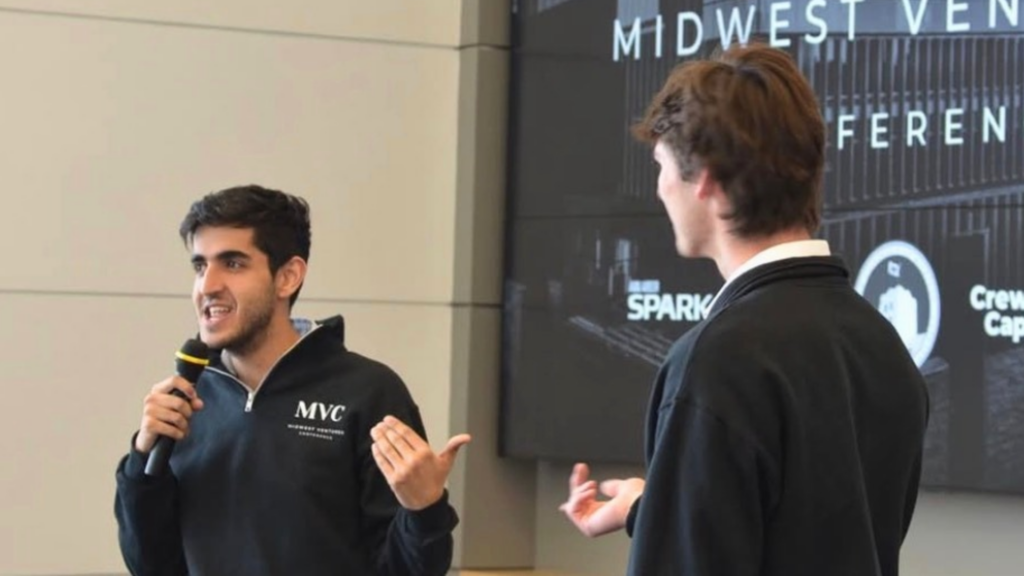
When Arjan Guglani arrived at the University of Michigan, he already wanted to build something of his own. The challenge was convincing other people that he could.
“When you’re 18, no one takes you seriously,” Arjan says. “Building products and things was my way of standing up to that.”
Instead of waiting for experience to come with age, Arjan started creating it for himself. He studied computer science, business, and design, pursued entrepreneurial projects, and became the only first-year student in the 2020 Entrepreneurial Leadership Program cohort.
“I wouldn’t have been in those positions because I could talk well,” he says. “It was because I was out doing entrepreneurial things.”
That instinct to demonstrate his ideas through action would carry Arjan through startup projects, product management, venture investing, and eventually into aviation. Today, as Director of Product at Archer, he is helping build technology that could reshape how people move through cities.
Finding ELP
Arjan came to Michigan with interests that crossed traditional academic boundaries. He was drawn to computer science, business, and design, but he was still learning how those interests might fit together. ELP gave him an opportunity to explore that intersection through entrepreneurship.
“In the ELP program, I was introduced to working at startups,” he says.
Through ELP, Arjan secured an internship that introduced him to product management and the questions that guide the work: Is the problem big enough? Is it interesting enough? Is the proposed solution something people need?
The experience helped him understand how technical knowledge, business strategy, and user-centered design could come together to build a product.
ELP also put him in an environment where his age mattered less than his willingness to contribute. As the only first-year student in his cohort, Arjan was surrounded by students with more college experience, but he had already shown that he was ready to take ideas seriously and do the work to move them forward.
ELP didn’t give Arjan his drive to build. It gave him an early opportunity to apply it.
Building Across Michigan
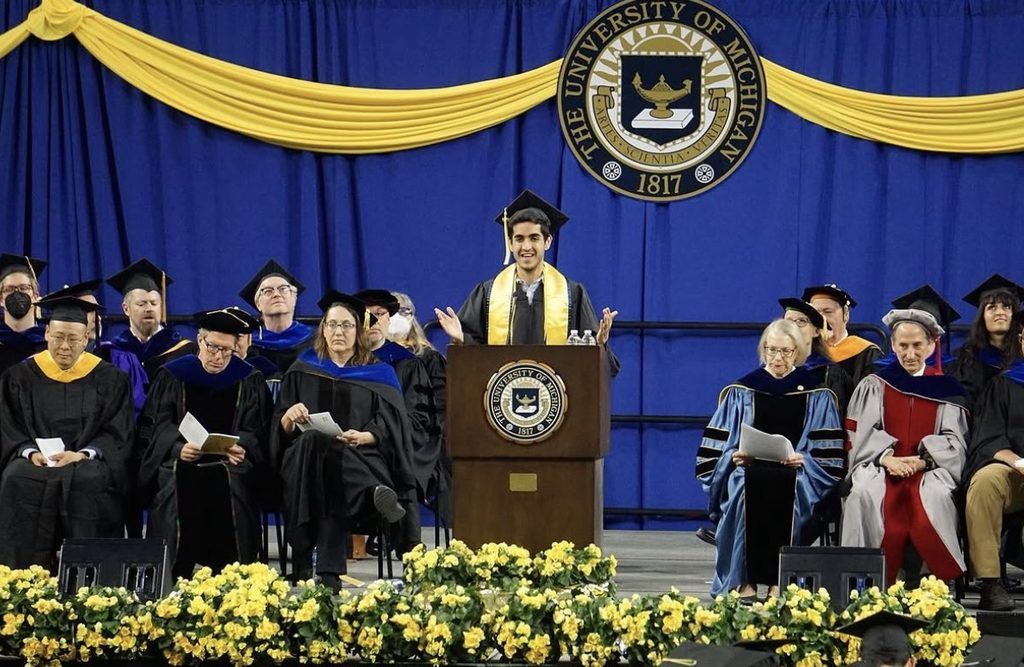
ELP was Arjan’s starting point within a much larger entrepreneurial community at Michigan.
For him, the university’s scale was an advantage. Michigan brought together students with expertise in engineering, business, design, and countless other disciplines, creating an environment where an idea could quickly attract new perspectives.
“It’s the size of the university against the quality,” Arjan says. “There are a lot of people who are all very smart. U-M is unique in that equation of quantity and quality of students.”
That combination made building feel possible.
“If you have an idea, there are enough people who would be willing to work on it with you,” he says.
While at Michigan, Arjan co-founded UniFlow and helped launch UpRound Ventures. As his interests evolved, he found opportunities across the university to explore both startup building and venture investing.
He initially worked closely with the Center for Entrepreneurship, where ELP connected him directly with startups. Later on, he also got involved with the Zell Lurie Institute and its investing programs.
“The entrepreneurship ecosystem at U-M is not centralized, which I enjoyed,” Arjan says. “I was able to engage in so many different programs and types of entrepreneurship.”
Each part of that ecosystem offered him something different.
“CFE was working directly with startups. ZLI had investing programs,” he says. “As my interests ebbed and flowed, so did my participation.”
The number of options could sometimes feel overwhelming, but it also gave Arjan room to experiment. He didn’t have to decide immediately whether he was a builder, product leader, or investor. Michigan gave him the chance to try each role and better understand where he wanted to go deeper.
Evaluating an Opportunity
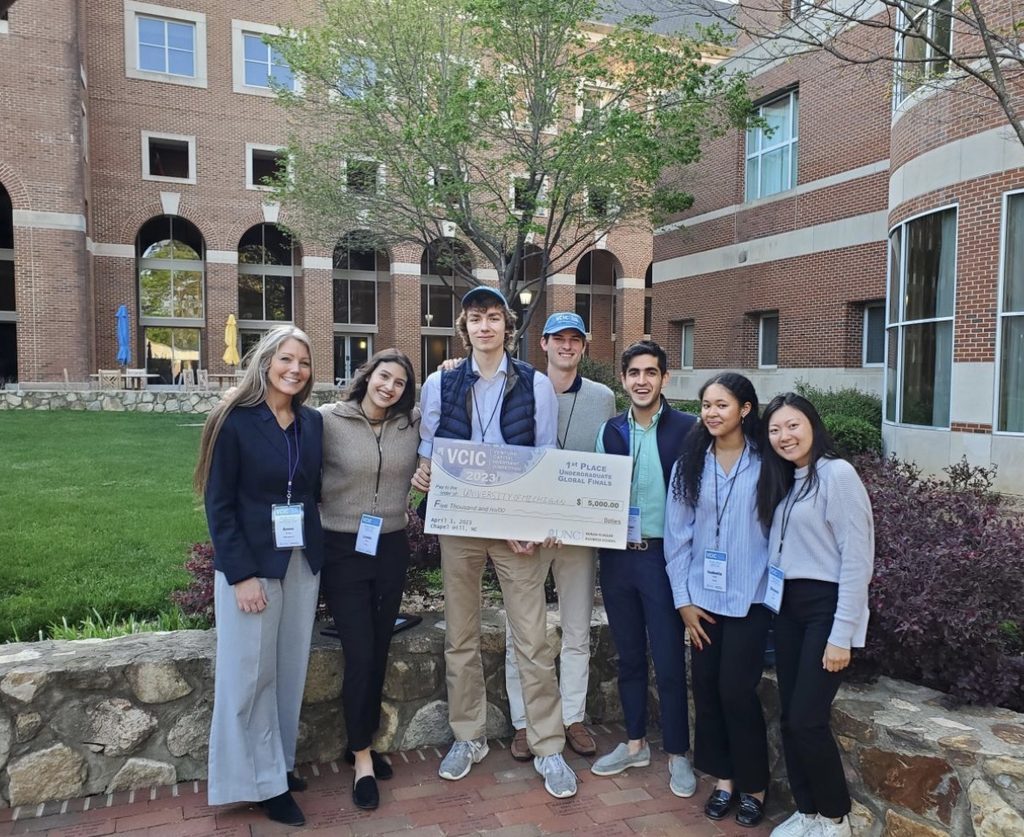
One of Arjan’s most influential experiences came through the Michigan Investment Challenge, a Zell Lurie Institute program that helped him understand how he approached deals and evaluated opportunities.
“The biggest nugget of knowledge I got was from the Michigan Investment Challenge,” he says. “I really understood how I thought about deals and investing. I became an investor there.”
The experience became part of a larger set of entrepreneurial skills he developed outside the traditional classroom.
“Extracurriculars through CFE and ZLI gave me the skills I use every day,” Arjan says.
His connection to the Michigan Investment Challenge has also continued beyond graduation. He now returns to Michigan each year to serve as a judge, helping a new generation of students work through the same questions that shaped his own thinking.
It is one of several ways Arjan’s Michigan experiences continue to show up in his work: ELP taught him how to approach product management, while investing taught him how to assess opportunities across industries and companies.
Together, those skills prepared him to explore widely, and eventually recognize where he wanted to build.
From Breadth to Depth
After Michigan, Arjan’s career moved through aviation, investing, consulting, product work, and founding. While the roles were different, each gave him a different perspective on how ideas become companies and how technology reaches the people who need it.
Investing was especially appealing to Arjan’s curiosity. It allowed him to study many companies, industries, and problems at once.
“Being an investor gets you a lot of oversight into many things, but not a lot of depth,” Arjan says. “It’s interesting for someone who’s intellectually curious, but if you want to go deep and really own something, there’s a different pull to it.”
The work helped him explore the aviation industry and identify the opportunities he found most compelling. But the more Arjan learned, the more he felt drawn back toward building.
He compares the process to fishing.
“Investing was like going fishing, and then you find what you want to do,” he says. “It’s like, ‘I want to do this for myself.’”
Arjan had spent years evaluating ideas, working with startups, and learning how other people built companies. Eventually, he wanted the depth and ownership that came from pursuing an opportunity himself.
It was a return to the instinct that first drew him to ELP: the desire not only to understand an idea, but to help make it real.
Building the Future of Aviation
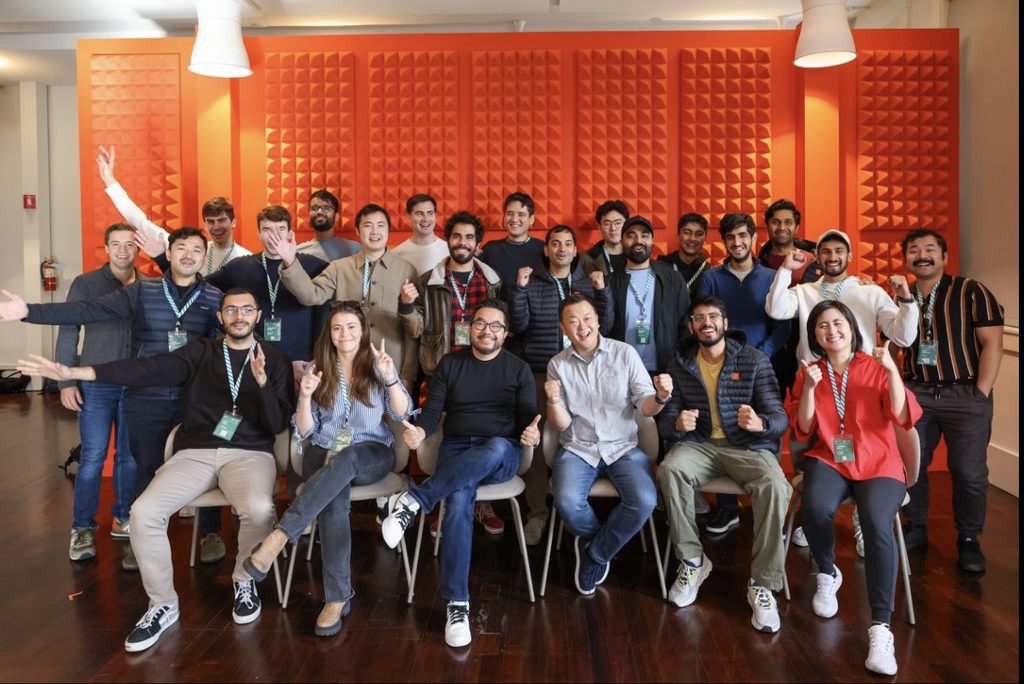
Today, Arjan’s work brings together many of the interests he began exploring at Michigan: technology, product development, investing, and aviation.
What motivates him is not simply creating new technology. It is the possibility of changing how people live.
“We’re building new tech that will reshape how people move around cities and change lifestyles,” Arjan says.
He points to a familiar tradeoff as an example. Someone might want to live near the beach in California, but that could mean spending 2 hours driving to Los Angeles. New forms of aviation could change the relationship between where people live, where they work, and how they experience a city.
The work requires Arjan to apply both breadth and depth. He must understand the broader market and evaluate whether an opportunity is meaningful, while also delving into the day-to-day decisions required to develop a product.
Those are skills he first began practicing through Michigan’s entrepreneurial ecosystem.
“The internship I did through ELP taught me about product management, and I use those skills every day,” he says.
ELP introduced Arjan to startup work when he was still a first-year student. The experience showed him that entrepreneurship did not belong only to people with years of experience or a particular academic background. It belonged to people willing to act, learn, and contribute.
Start by Lending a Hand
For Michigan students interested in entrepreneurship but unsure where to begin, Arjan’s advice is practical: find someone building something interesting and offer to help.
“There are enough people like me who desperately need an extra pair of hands,” he says.
Arjan took that approach himself as a student.
“When I was a junior, I cold emailed a ton of founders trying to get work at their startups,” he says.
Students do not need to wait until they have a company of their own (or until they feel completely qualified) to gain entrepreneurial experience. They can begin by reaching out to a founder, joining a project, testing an idea, or finding a program like ELP that gives them the opportunity to learn by doing.
Arjan’s journey has taken him from the only first-year student in his ELP cohort to a career building products in aviation. Along the way, he has explored different industries and roles, following his curiosity until he found the problems he wanted to own.
Arjan did not wait for someone else to decide that he was ready. He started building and let the work speak for itself.