

FUNDING STUDENT VENTURES
Fuel is a University of Michigan funding program providing monthly, non-competitive awards of up to $25,000 to help student teams reach milestones and move their ventures forward.
Your startup shouldn’t stop at a great idea.
Fuel gives U-M student founders up to $25,000 in non-dilutive funding, and resources to turn ideas into real ventures. Fuel helps teams reach the milestones that move their startups forward.
Ready to take your venture to the next level? Apply to Fuel. To see if Fuel is right for you, schedule a virtual meeting with Alison Smith or Karen Vera and learn how Fuel can support your journey.
From idea to impact: Follow these steps to Fuel Funding.
(Click to Read the FAQ Section)
1. PREPARE
Prepare to apply for Fuel by reviewing the application and budget templates. Don’t forget to check out the FAQ on the site.
2. APPLY
Ready to apply for Fuel? Submit your online application for Fuel by noon on the due date for consideration.
3. PRESENT
Congratulations! Your team has advanced to the in-person presentations. Here’s what you need to know next.
Unsure about your startup stage and how much Fuel funding you need?
fuel SCHEDULE
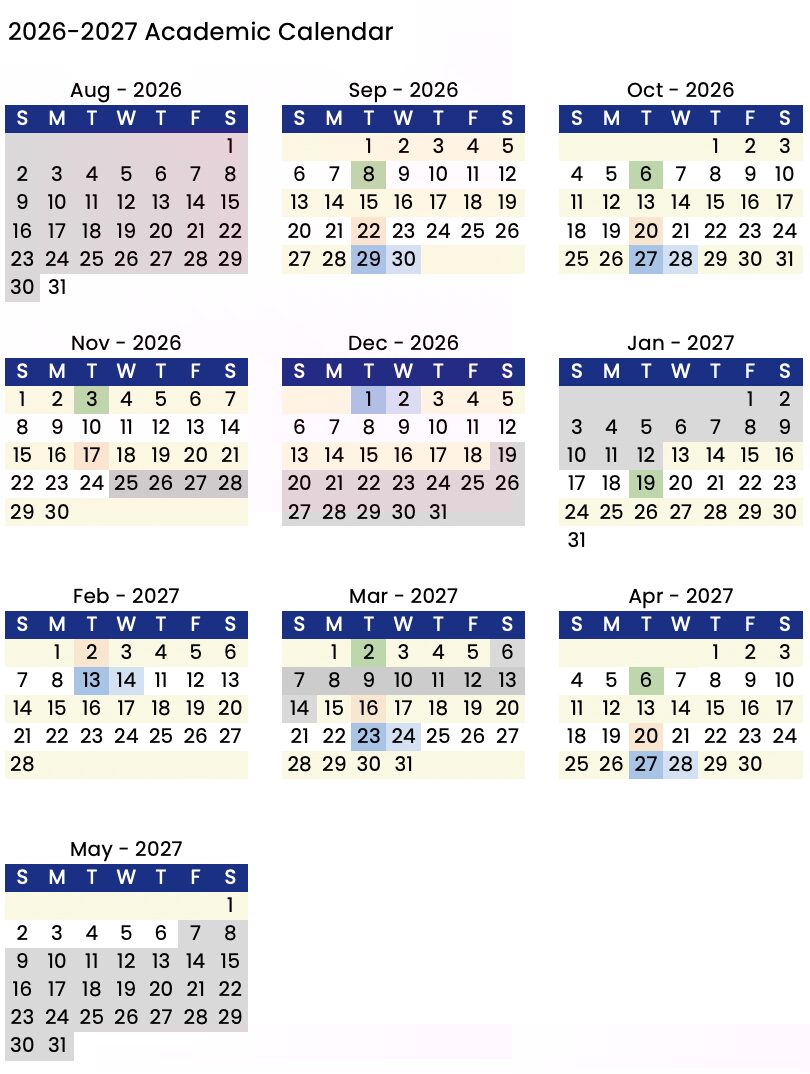
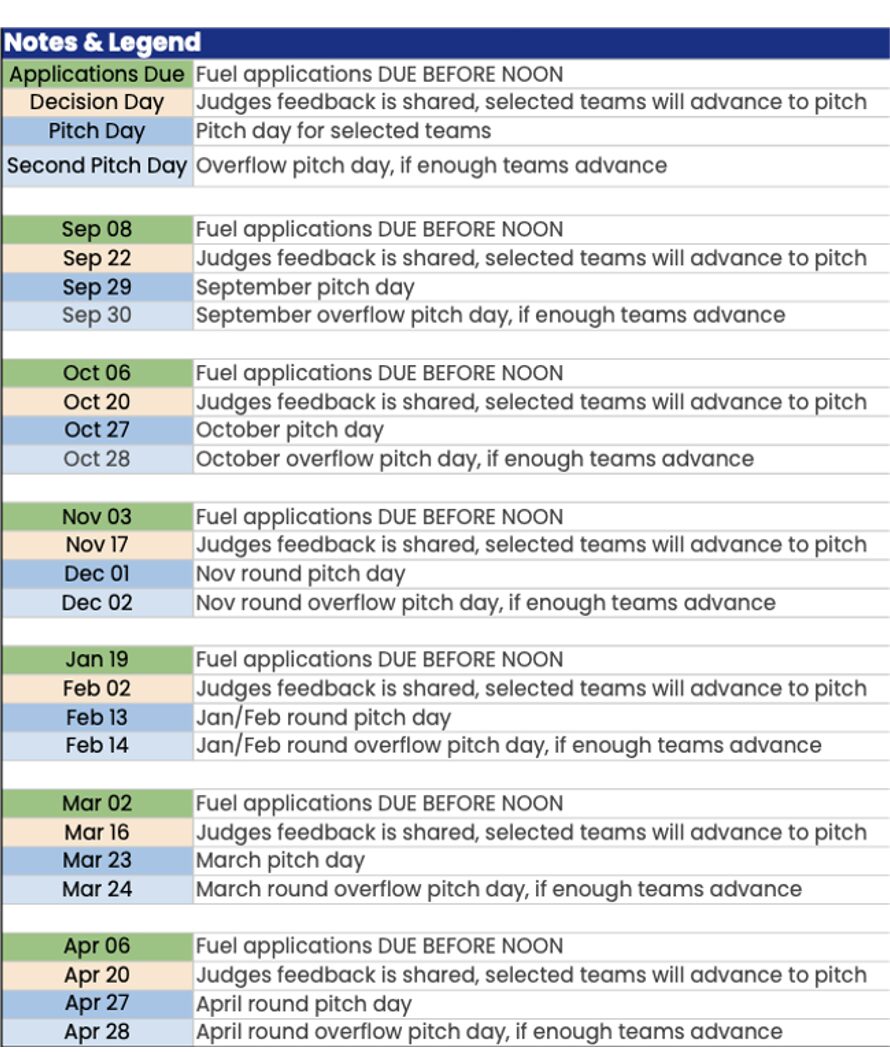
The academic year offers six application cycles for Fuel funding, with deadlines in September, October, November, January, March, and April.
View exact application deadlines and monthly pitch dates on the Fuel Calendar or review the general timeline below:
Week 0 (Deadline): Applications must be submitted by 12:00 PM (Noon) on Tuesday to be considered for that month’s cycle.
Week 2: Teams receive written feedback from the judges’ panel, and advancing teams are notified.
Week 3: Invited teams give an in-person pitch to the judges’ panel.
Week 4: Fuel award decisions are communicated.
fuel faq
How can i protect my intellectual property (IP)?
Applications are shared with U-M staff and external professional judges, so treat your application as non-confidential:
Do not disclose proprietary technical details.
Focus on customer insights, problem severity, and high-level mechanics rather than secret technical formulas.
Have questions about IP boundaries? Contact Alison Smith at alisone@umich.edu before applying.
What expenses are supported by Fuel?
The Fuel program funds specific, justified expenses needed to hit your immediate 12-week milestones. Fuel judges value resourcefulness and grit.
Appropriate Uses of Fuel Funds:
- Prototype Development: Costs associated with developing a working prototype or MVP.
- Expenses for Customer Discovery: Travel expenses directly related to meeting and understanding potential customers, such as travel to or entrance fees for a professional conference to meet many stakeholders at one time.
- Software Subscriptions: Specialty tools or services essential for advancing your 12-week milestone (excludes enterprise-level project management platforms).
- Targeted Legal & Compliance Services: Specialized legal counsel for intellectual property, patent strategy, or complex regulatory consultation (FDA, HIPAA, etc).
Fuel Does NOT Fund:
- Mass Marketing: Third-party marketing agencies or large-scale ad campaigns.
- Scale Manufacturing: Production-grade tooling, dies, or high-volume manufacturing equipment.
- Direct Payments to People: User interview incentives, salaries for team members/interns, or founder reimbursements for past out-of-pocket expenses.
- Standard Business Overhead: Enterprise software, Google Workspace, domain name registration, or software and tools already available free to U-M students.
- Unnecessary Travel & Tools: Any travel, software, or tools where free alternatives, university resources, or scrappy workarounds exist.
How is Fuel funding disbursed?
- Fuel funding can be paid directly to either the student applicant or their registered business entity, depending on the team’s preference. Once notified of your award, you will complete a brief survey to select your payout method and initiate processing through U-M systems.
- Payout processing follows two standard pathways:
- Standard Vendor Setup: Winning teams must complete a setup process with U-M Shared Services Center (SSC) to be registered as an official vendor in the university system. Note: U-M uses the administrative term “vendor” to set up anyone receiving a payout; you do not need a registered business or LLC to receive funds as an individual. You will receive an email directly from U-M Shared Services that requires a prompt response to avoid payment delays.
- U-M Student Employees: If the designated recipient is currently employed by the University of Michigan in any capacity (e.g., GSRA, GSI, student assistant, temporary staff), you will complete an additional internal form, and your award will be disbursed through your regular U-M paycheck.
- Note on Taxes & Financial Impact: Funding disbursed to individuals—either as direct vendor payments or through paychecks—may have tax implications. We encourage student recipients to review how an award may affect their personal tax standing.
Why would my Fuel application be declined?
Applications are typically declined when they do not provide enough specific detail for judges to evaluate the team’s progress or financial request. Common reasons include:
Vague or AI-Generated Text: Answers that rely on generic, AI-generated filler or long run-on sentences without specific details about your venture.
Repetitive Answers: Copying and pasting the exact same response across multiple application questions instead of answering each prompt specifically.
Unclear Budget Items: Requesting lump sums without itemized breakdowns or listing expenses that violate Fuel funding guidelines.
Lack of Discovery Proof: Claiming there is a problem without providing evidence of actual interviews or conversations with potential customers.
Tip: Keep your answers concise, direct, and specific to your business. Judges strongly prefer authentic, clear responses over polished buzzwords.
Do I need to meet with Fuel staff before applying?
While meeting with staff is highly recommended, it is not currently required.
Booking a brief advising session before you apply allows us to review your customer discovery progress, refine your 12-week milestones, and clarify eligible funding expenses – all of which significantly improve your chances of advancing to the pitch stage.
Tip: Want feedback before submitting? Book a 1:1 advising session with Fuel staff before the application deadline
What if I haven’t talked to any potential customers or stakeholders?
Every Fuel stage requires documented proof of real customer discovery. We fund ventures that strive to clearly define the problem before building a solution.
If you haven’t interviewed potential customers or stakeholders yet, your best first step is to book an advising session with CFE staff. We can help connect you with relevant campus resources and advisors to help get your customer discovery started.
Can I apply for Fuel more than once?
Yes, applicants may re-apply.
If you are a previous awardee: As your venture advances, you can apply again to Fuel for funding toward your next set of 12-week milestones.
If you were not awarded funding: Review the specific written feedback provided by the judges, complete the suggested validation work, and reapply in a future cycle with an updated application.
who are the fuel judges?
Fuel judges include U-M entrepreneurial staff, directors, and experienced entrepreneurs from the U-M external network. The group changes monthly, with some core members participating regularly. For Fuel presentations, judges can attend in person or remotely.
HOW JUDGES DETERMINE FUNDING AWARDS?
- Judges deliberate immediately following the in-person pitch presentations. They will either reach a majority consensus right away or follow up with your team if outstanding questions remain. You will also receive actionable written feedback approximately one week after the pitches.
- Funding decisions are not all-or-nothing. Based on the strength of your application, pitch presentation, and responses to judges’ questions, they may award any amount from $0 up to your full request.
How are Fuel applications evaluated (rubric)?
- Judges use a standardized evaluation rubric to ensure every applicant is assessed fairly and consistently. Rather than scoring teams on a pass/fail scale, the rubric helps judges evaluate your problem validation, the depth of your customer discovery, and the feasibility and clarity of your 12-week execution plan.
- Because priorities shift as a company matures, judges will place heavy emphasis on customer discovery and problem severity during early stages, and expect explanations of unit economics, customer retention, and operational readiness in later stages.
Who is my fuel contact?
Please contact Alison Smith with your questions: alisone@umich.edu
Need more answers? Schedule a virtual meeting with Alison Smith