

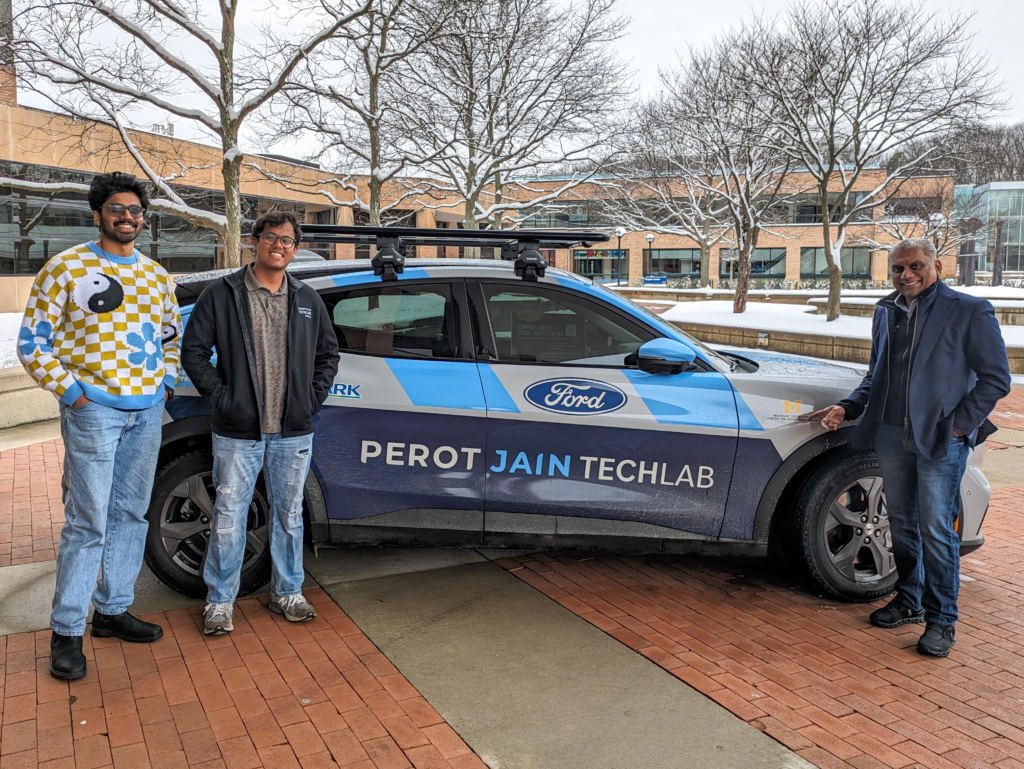
The University of Michigan Center for Entrepreneurship is proud to announce philanthropic support for the Perot Jain TechLab (PJTL) program series through 2028. From leading venture capital firm Perot Jain and founding partners Ross Perot Jr. and Anurag Jain, renewed funding will provide an additional $1.5M for project resources, student experiences, and program operations.
Anurag Jain is an alumnus of U-M’s Ross School of Business.
Since its launch, the Perot Jain TechLab Series has become one of the university’s most distinctive experiential learning programs, pairing technically skilled students with emerging companies to tackle complex challenges. Through hands-on projects and exposure to entrepreneurial thinking, participants develop practical expertise—preparing them to lead the next generation of impactful startups. Entering its 10th year, the program series has attracted more than 500 students from 10 schools and colleges across the University of Michigan, with 72 companies from around the world providing students with access to leading-edge technologies.
Nick moroz
Director of Entrepreneurial Practice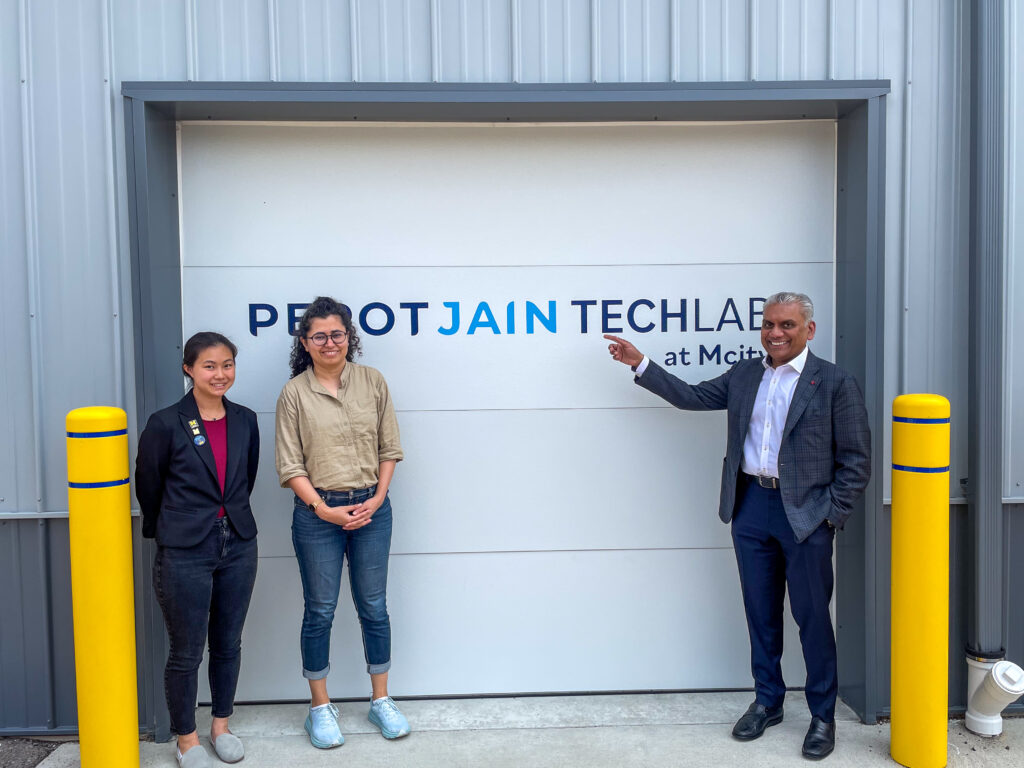
A model for applied entrepreneurship education
PJTL is built on a simple but powerful premise: entrepreneurship is best learned by doing. By challenging students to lead ambitious, exploratory, and often open-ended projects in collaboration with high-growth startups through year-long, project-based engagements. It is in these settings that students leave the comfort of well-defined textbook problems and instead face complex choices about project scoping, team management, resource allocation, and timing.
These collaborations sit at the intersection of startup innovation, university research, and industry demand. Students are not observing entrepreneurship from a distance; they are actively advancing technologies and solutions that matter. Whether working on:
- Multisensor Long-Range 3D Detection & Tracking for Autonomous Vehicles with Gatik: Students successfully demonstrated and evaluated advanced onboard systems that combined HD cameras and long-range lidar to detect and track objects in real time at distances beyond 120 meters. Their work helped improve trajectory prediction and planning for autonomous vehicles by using Gatik’s specially labeled dataset, filling a crucial gap in reliable long-range data.
- AI-Powered Extraction and Standardization of Medical Test Data with AIPHAS: Students successfully validated the use of Large Language Models (LLMs) and Retrieval Augmented Generation (RAG) to extract, standardize, and interpret important medical test results from patient records, such as Complete Blood Count (CBC) reports. They are now working to pilot a user-friendly interface that delivers personalized, clinically relevant insights for both physicians and patients.
- Reusable Rocket Recovery System with FireFly Aerospace: Students aim to demonstrate a proof-of-concept recovery system intended to eliminate the need for traditional landing legs on medium-sized reusable launch vehicles, reducing parasitic landing mass and improving recovery efficiency, advancing the economics and technical feasibility of next-generation reusable rockets.
Students experience how ideas move from concept to prototype to near-term market application. They learn how technical decisions are shaped by customer needs, regulatory environments, manufacturing realities, and capital constraints—developing both engineering rigor and entrepreneurial judgment.
Continued support from Perot Jain ensures that the PJTL series remains a cornerstone of applied entrepreneurship education at the University of Michigan. This funding strengthens the program’s operational foundation, expands the resources available to student teams, and sustains the vibrant ecosystem of founders, investors, mentors, and public-sector collaborators that make these experiences possible.
anurag jain
Perot JainThe program’s impact is most evident in the trajectory of its students and alumni. Hundreds of participants have engaged directly with startup teams, tackled emerging technology challenges, and operated within fast-moving entrepreneurial environments. Many have transitioned into full-time roles in sectors aligned with their PJTL experiences. Others have gone on to found their own companies or join early-stage ventures as early employees, carrying forward the mindset and practical skills developed through PJTL.
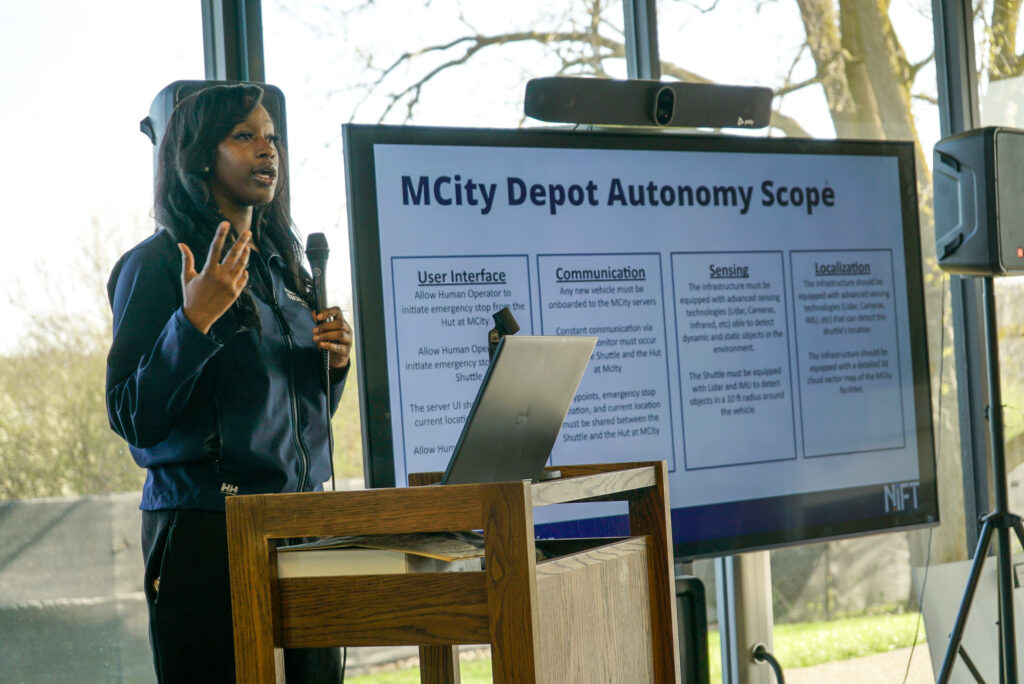
Beyond technical proficiency, students build durable leadership capabilities, such as communicating across disciplines, managing ambiguity, collaborating with founders, and presenting work to industry stakeholders.
Michael Ettlinger
MEng Energy Systems Engineering ‘26, member of the Mission Zero Technologies TeamGrowth through partnership and ecosystem impact
Since the partnership with Perot Jain began, the TechLab model has expanded from its original focus in 2016 on connected and autonomous vehicle technologies as TechLab at Mcity into a broader portfolio addressing emerging sectors, including carbon sequestration, transportation electrification, healthtech, and advanced aviation. Each expansion has brought new industry collaborators, faculty partners, and public sector stakeholders into the classroom, enabling students to work at the forefront of technological and societal transformation. The initial funding from Perot Jain attracted additional support from key partners, including Ford Motor Company, Ann Arbor SPARK, and a notable Mobility Public Private Partnership (MP4) grant from the State of Michigan Office of Future Mobility and Electrification. The MP4 grant was especially helpful in expanding the program’s reach to more students, engaging additional companies, and entering new industries with a special focus on transportation electrification. This partnership also made it possible for student-led projects to be deployed at sites such as Michigan Central and the Detroit Transportation Innovation Zone.
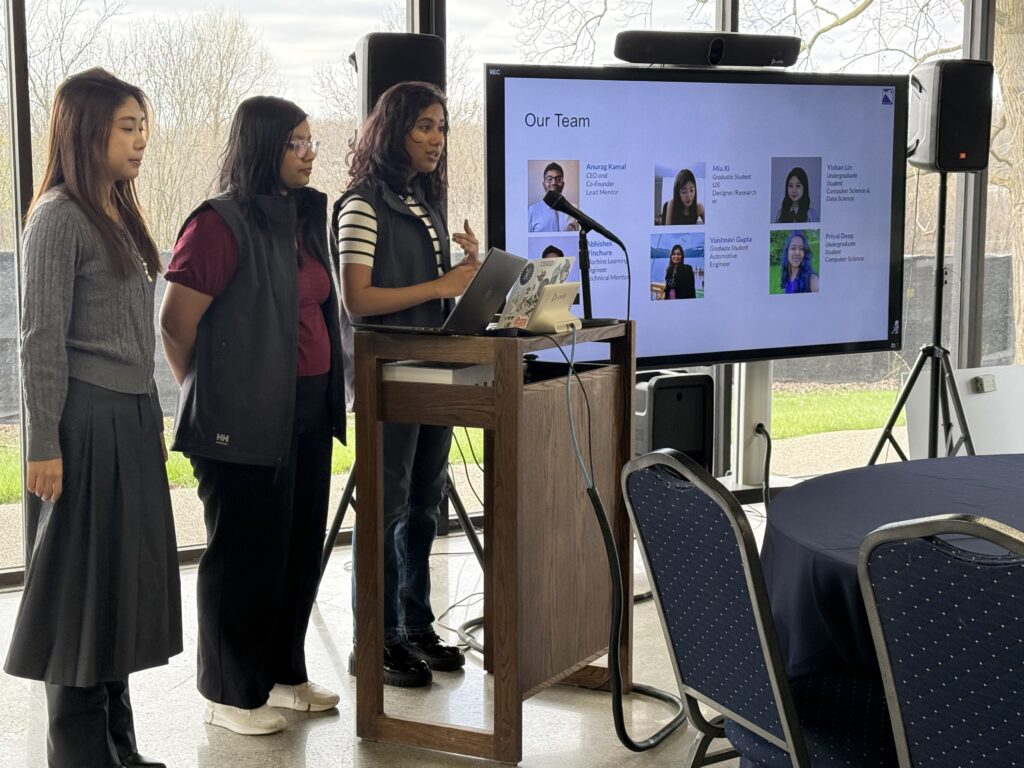
“Michigan’s leadership in future mobility depends on strong partnerships that connect innovation, industry, and talent development. The PJTL exemplifies the kind of experiential, real-world engagement that strengthens our state’s mobility ecosystem while preparing the next generation of engineers, entrepreneurs, and industry leaders,” said Justine Johnson, Michigan’s Chief Mobility Officer. “By giving students the opportunity to work directly on cutting-edge technologies alongside startups and public-sector partners, PJTL advances the mission of the Office of Future Mobility and Electrification (OFME) to position Michigan as the global leader in developing and deploying innovative mobility solutions.”
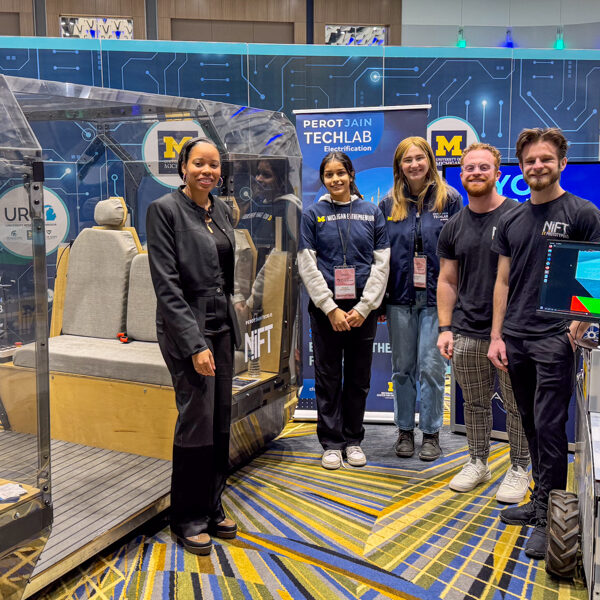
The newest addition, the Perot Jain TechLab Air & Space program, connects students with innovators in aerospace and advanced aviation, leveraging U-M’s rich history of leadership in these fields. Its growth is closely aligned with the university’s M-Air initiative and strengthened through partnerships linked in part to the Michigan Department of Transportation. Together, these collaborations position PJTL as more than a startup engagement platform; it is a nexus connecting students with startups, research centers, government agencies, and global innovation networks.
The PJTL series has played a pivotal role in fostering a robust innovation ecosystem at the University of Michigan and extending its impact far beyond campus. Participating startups benefit from exclusive university resources, strategic industry partnerships, and the expertise of talented student teams, all of which contribute to achieving significant technical milestones. As a result, many companies have accelerated product development, enhanced collaborative opportunities, and advanced their fundraising objectives during or shortly after their involvement with the program. To date, PJTL-affiliated companies have collectively raised over $400 million in investment through student-led projects, with 10 successful exits via acquisition or IPO. This remarkable growth can be attributed to the transformative relationships and progress cultivated through participation in PJTL initiatives.
Greg McGuire
Mcity and M-Air Managing DirectorThe PJTL series has played a pivotal role in fostering a robust innovation ecosystem at the University of Michigan and extending its impact far beyond campus. Participating startups benefit from exclusive university resources, strategic industry partnerships, and the expertise of talented student teams, all of which contribute to achieving significant technical milestones. As a result, many companies have accelerated product development, enhanced collaborative opportunities, and advanced their fundraising objectives during or shortly after their involvement with the program. To date, PJTL-affiliated companies have collectively raised over $400 million in investment through student-led projects, with 10 successful exits via acquisition or IPO. This remarkable growth can be attributed to the transformative relationships and progress cultivated through participation in PJTL initiatives.
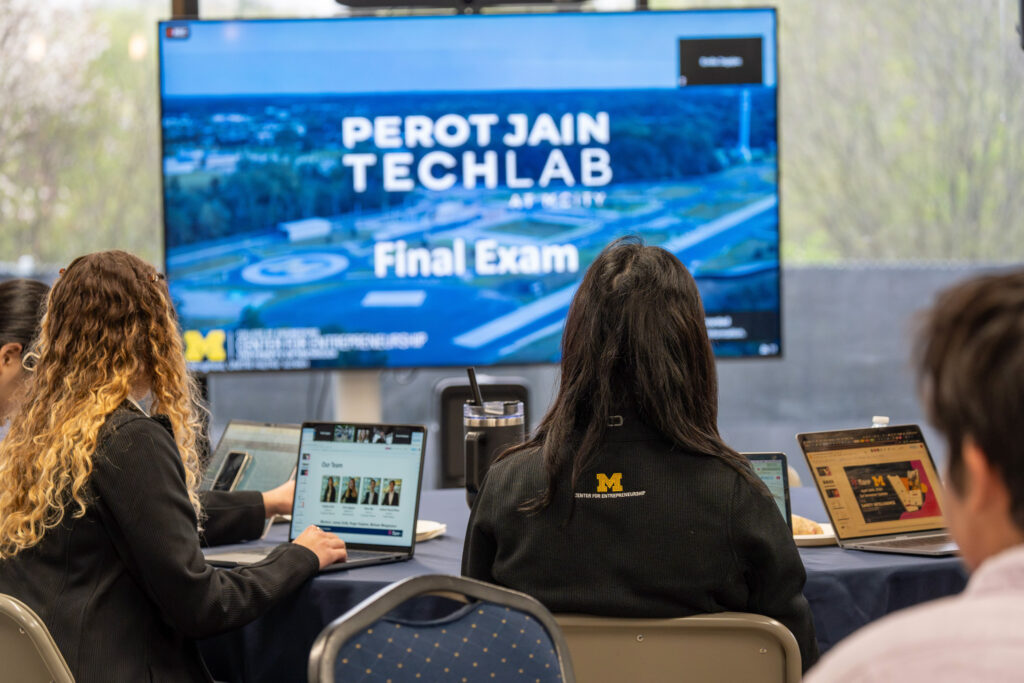
By strategically connecting outstanding student talent with genuine industry challenges, PJTL serves as an effective conduit between academia and innovation, further establishing U-M as a leading center for emerging technologies and entrepreneurial excellence. As participating companies recruit from PJTL programs and capitalize on opportunities to engage with regional industry partners and customers, many have expanded their operations within Southeast Michigan. This dynamic synergy continues to propel growth and accelerate momentum across the ecosystem: the flywheel is spinning.
Pranjal Khakse
MS Mechanical Engineering ‘25, member of the Utilidata TeamLooking Ahead: A Partnership Built on Impact
With renewed support from Perot Jain through 2028, the Perot Jain TechLab series will focus on deepening and enriching the student experience and the programmatic reach. Expanded resources will strengthen project support, provide access to advanced tools and technologies, and create even more immersive, mentorship-driven engagements with startups and industry partners. The continued investment ensures that students can translate classroom knowledge into meaningful innovation impact while developing the technical, entrepreneurial, and leadership skills required to thrive in high-growth environments.
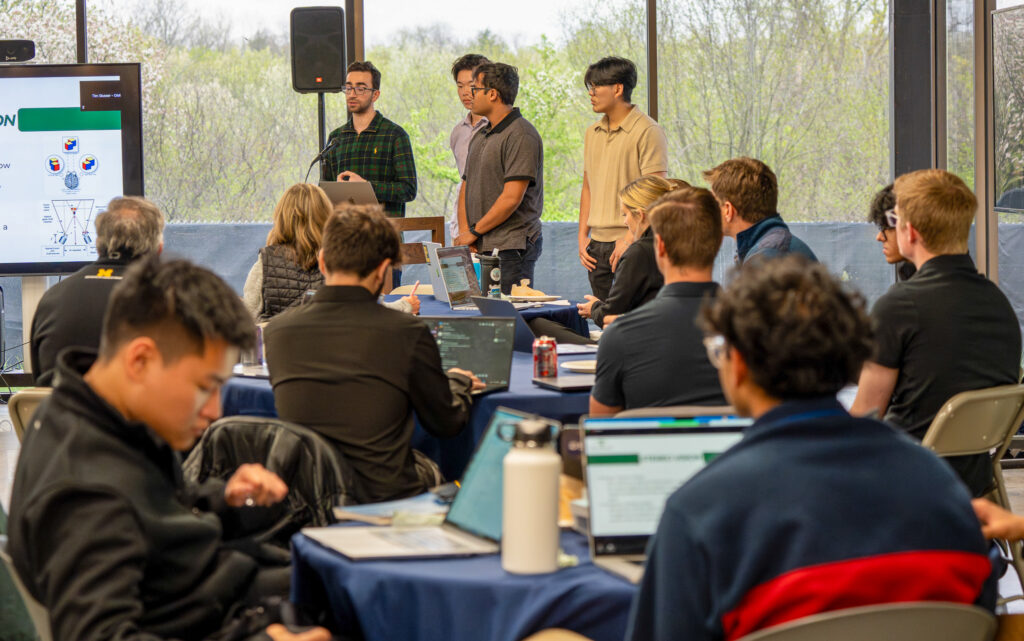
This extension reflects a shared commitment between Perot Jain and the University of Michigan Center for Entrepreneurship to empower students through experiential education and to strengthen the broader innovation ecosystem. As PJTL continues to evolve, it will remain a platform where students learn by building, collaborating, and solving real-world challenges alongside startups and forward-looking organizations.
Kurt Skifstad
Dixon and Carol Doll Executive Director of the Center for EntrepreneurshipPerot Jain is an early-stage venture capital firm committed to partnering with bold and innovative entrepreneurs to build highly disruptive, industry-transforming companies and technology.