

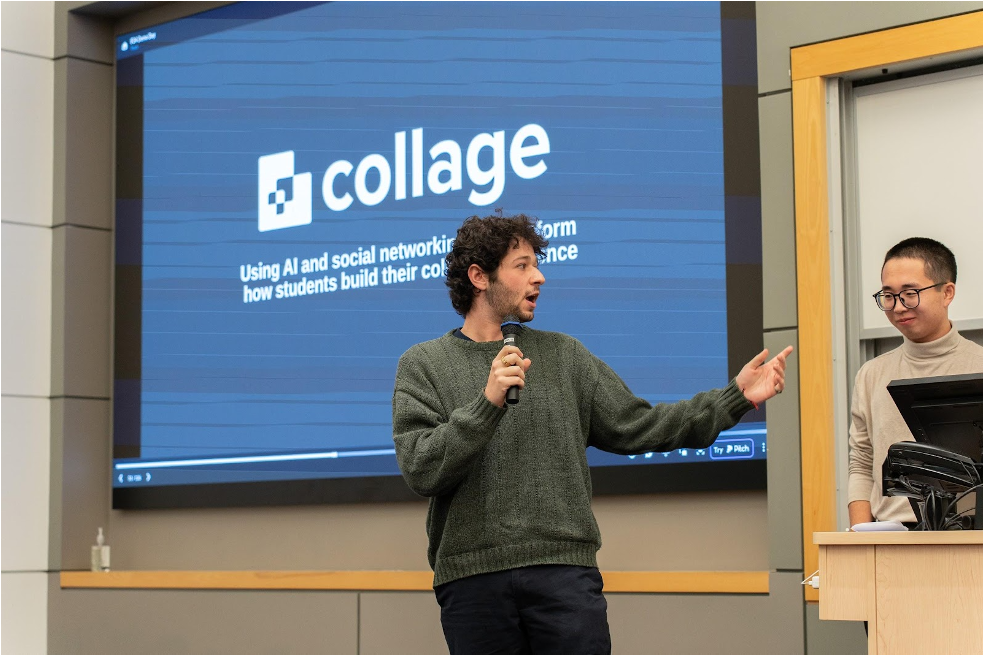
Contributed by Maxwell Feldman, Entrepreneurial Leadership Program Cohort 2025; Major-Philosophy, Politics, and Economics
For The Student Founders Who Fail
When you’re a startup CEO, it’s taxing to fail. Especially when you’re a student. The image of the student founder who courageously builds a company in their dorm room and raises a lot of money is one everyone is probably familiar with and more likely to be showcased on a CFE brochure. I’m sure you can think of some examples–the smiling faces of pitch competition winners holding a comically large check, the self-assured hackers who land a coveted spot in YC, or the LinkedIn warriors announcing their $1M seed round for their Cursor for toilets startup. These are what all student founders aspire to be.
But then there are those of us who don’t make it there–the student founders who struggle, who grind, who follow all the steps that the successful entrepreneurs do, and for one reason or another still fall short. I’ve decided to write my blog post about those students because I am one of them, and because failing at my first startup hasn’t discouraged me from being an entrepreneur. If anything, it reaffirmed my love for entrepreneurship.
Building collage
From April 2024 until May 2025, I was the CEO and founder of Collage, an AI-powered academic and career advising startup for college students. Our mission was to help all students, regardless of their academic discipline or professional interests, make the best use of their college experience so they could have the best outcomes postgrad. A noble cause; At least I thought so.
When I started Collage, I was just a student journalist who knew nothing about building a company. I tried my best to learn what I could from the YC YouTube channel and Paul Graham essays, but nothing the entrepreneurial godfathers said prepared me for the real act of building a business. I was lucky enough to raise $10K through scholarships and angel investors, convinced my roommate Alex to be my COO, and emailed a stranger named Charlie (now a close friend) to be our CTO. Together, we set out to build the Pinterest for Education, a social, personalized and innovative platform that empowered students to build class schedules, join clubs, and find ideal internship opportunities. Or so we hoped.

I was in the hospital when we launched our MVP. Anxiety and a bad reaction to medication marooned me in Mott’s Children’s Hospital for five days. I’ll never forget taking startup meetings from my emergency room bed, or making promo flyers in Canva to celebrate hitting 100 users while an IV poked into the veins of my arm. Ultimately, this hard work paid off as we reached over 200 students in our initial pilot launch. This might not sound like a lot of people (and it definitely isn’t for a consumer product) but for a fledgling startup it felt like the first step towards greatness.
In retrospect, I may have been a little too overconfident, because the next thing I did was try to pitch our pre-revenue Edtech startup to VCs. If you know anything about fundraising, you know this is a bad idea. I spent over a month of my focus landing a dozen VC firms––a couple rejected us, many ghosted us, and one even laughed in our faces. You live and you learn. For anyone out there who’s working on a startup and thinking about trying to raise VC money, let me give you some free advice: if you have no revenue or you aren’t connected up the wazoo, save yourself the trouble and go get some revenue, or some crazy connections, or just bootstrap. You’ll thank me later.
When fundraising failed, I turned my focus back to building. I thought the answer for Collage would be to build a great product and sell that product to universities. Then we’d have revenue and could take our startup to the next level. I reached out to every college in Michigan––yes, literally every single one of them––and tried to pitch Collage as a product that could boost student success and lower the caseload for advisors. In the end, I got ghosted by every single school’s advising department, even my own. So much for the Michigan difference.
After failing to secure institutional funding, after struggling to attract a single school in Michigan to demo our product, I knew our last hope lay with students. I realized if we could get the U-M student body to use Collage, and better yet pay for Collage, that that would be the clearest sign that it was something valuable to schools. So, I doubled my efforts, ballooned our team of seven up to ten, and went all in on launching an updated version of Collage to the U-M student body for Fall 2025 class registration. I hired a social media marketer, planned a three week go-to-market, stocked my car full of Washtenaw Dairy Donuts, and prepared myself for battle.
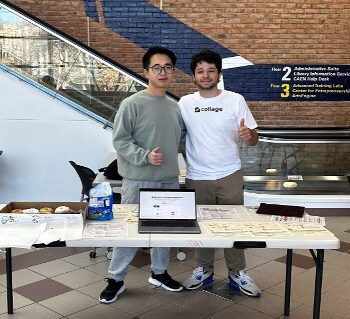
Collage was used by over 750 undergraduate students at the University of Michigan, helping them schedule over 12,500 credit hours worth of classes for the Fall semester. The students whose schedules we helped create are starting those very classes this month. A cool thought to have after so much hard work.
However, we had a user engagement problem. Students were using Collage, but not for an extended period of time. We struggled to retain our user base after the school year ended, and couldn’t convince students to pay for our premium features. Collage was great. But not something that people would pay for. It was time to close up shop.
Reflections
So I failed on my first startup. I not only burned through thousands of dollars of my own money and the money of my angel investors, but also burned through hundreds of hours of my precious college time, and hundreds of hours of the time of my cofounders, who put their faith in me. Yes, it stung. Yes, I was sad. But when I look back, I still think of Collage as a success.
I may have failed at my first startup, but now I know what it actually takes to build a company. I know what to do, and more importantly, what not to. That’s a lesson you can only get from doing something that doesn’t work out.
Collage failing wasn’t the final step of my student founder journey, but rather the next step on my path to becoming the best entrepreneur I can be. We can focus all we want on the student founders who hit it big on the first try, but only those of us who didn’t know how powerful it is not to.
As I work on my new venture –– which I’m building with my Collage co-founders –– I enter into it with something I didn’t have when I started Collage: strength of experience. I know what it means to pitch a product, to attract a user base, to manage a team of people with vastly different skillsets than myself, to handle taxes and legal filings, and to watch it all come crashing down.
For all the would-be student entrepreneurs out there who are scared to devote themselves to building because they’re afraid of failure, I urge you to take a deep breath, set your expectations, and prepare yourself for the beautiful failure that might come your way. Without the possibility of failure, there’s no possibility to learn.
Some Words from Emily
To conclude, please enjoy an Emily Dickinson poem that inspires me to keep trying everyday:
Finite — to fail, but infinite to Venture —
For the one ship that struts the shore
Many’s the gallant — overwhelmed Creature
Nodding in Navies nevermore —