

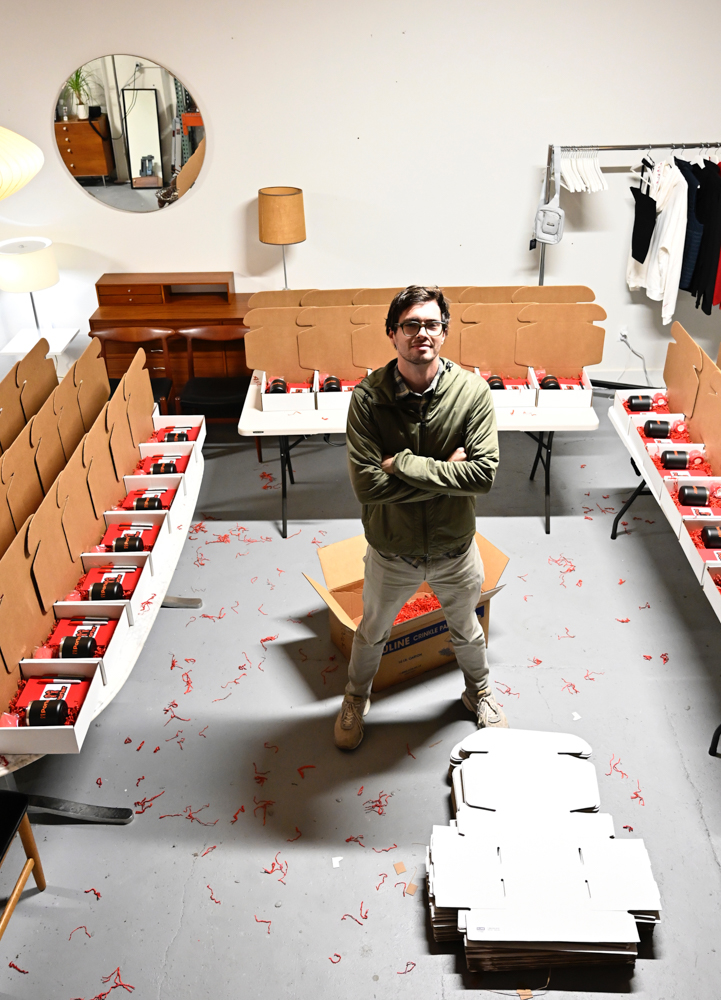
Some founders have one “aha” moment. Everest Guerra had a bunch—most of them happening right here on campus.
Everest (BS Computer Science, ‘19) first crossed paths with the Center for Entrepreneurship the same way a lot of students do: attending in ENTR 390 (Bus Entr in Thought & Action) and ENTR 407 (EHour), trying to figure out whether his ideas were actually businesses or just fun side projects.
Spoiler: they were definitely businesses.
While he was learning customer discovery and business models in class, he was also running Greek Dressing (his first merch company) out of Ann Arbor, selling apparel to student orgs. He jokes that he’d sit through a lecture about talking to customers, then walk out the door and immediately test it on Michigan clubs and frats.
“That overlap between CFE coursework and real life,” he told us, “is a big part of why I’m doing what I’m doing now.”
The Moment Everything Clicked
Fast-forward a few years: Everest is working at Morning Brew in New York, watching their referral program drive massive growth. On the outside, it looked polished. On the inside? Total chaos.
Interns were pulling SQL queries, digging through boxes in a closet, emailing winners one by one, packing shirts late at night…basically running a tiny fulfillment center next to the coffee machine.
Everest, having already built a collegiate merch company, saw what others didn’t: “They accidentally built a whole merchandise operation in a closet—and I knew how to fix that.”
Automating that system became the spark for Stitchi. Not a brand-new idea, just a painfully obvious problem he couldn’t unsee.

How Stitchi Grew Up
Stitchi started small: fix merch for one newsletter.
Then it became: help any organization run smarter merch programs.
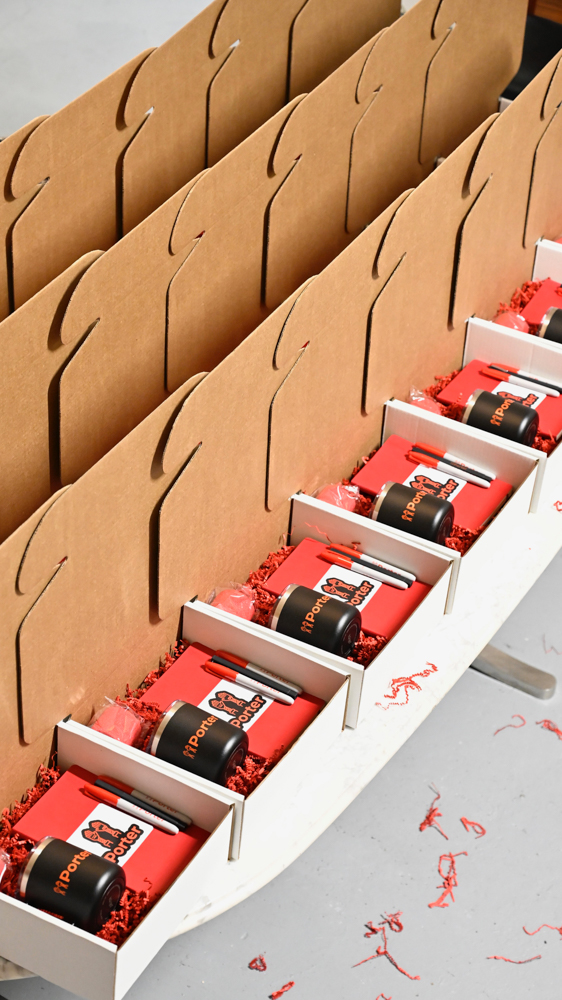
Now? It’s evolved into something way bigger. Everest calls Stitchi an “operating layer for physical brand experiences.” Think employee onboarding kits, client gifts, hospitality packaging, event merch—basically, all the physical touchpoints that make a brand feel real.
They also flipped the typical Silicon Valley script:
- No giant VC check.
- Bootstrapped, profitable, and customer-first.
- Service revenue (merch + packaging) funds the software.
“We shifted from being a software startup to being a hospitality-focused business,” Everest says. “Customers don’t just want a checkout button—they want a partner.”
The Hardest Part? Building Without Hype Money
Everest is a software engineer by training. So it surprised him when founding Stitchi meant spending 95% of his time not writing code.
The challenge:
How do you build long-term product vision while also paying rent, funding a team, and earning customer trust right now?
His answer: services first, software second.
Unscalable stuff. The gritty stuff. The behind-the-scenes work most people avoid.
“It’s slower,” he admits, “but it kept us disciplined, close to the customer, and profitable from day one.”
A very un-LinkedIn, very real founder journey.
Advice He Wishes Someone Told Him Sooner
“You don’t have to bet the whole farm on day one. De-risk in layers.”
Here’s what he means:
- Treat jobs and internships as paid R&D for your future company.
- Save early so you can buy time later.
- Start the company on nights/weekends.
- Let revenue validate the idea before quitting.
Everest launched Stitchi in 2021. He didn’t go full-time until 2024. And that wasn’t hesitation—it was strategy.
Traits He Sees in Successful Founders
Everest dropped a few gems for students who want to start something:
- Bias toward tiny action. Send the email. Test the landing page. Perfect is slow.
- Curiosity about unsexy problems. Opportunities hide in boring places—packaging, spreadsheets, supply chains.
- Hospitality mindset. Especially in B2B, people remember how you make them feel.
- Comfort with ambiguity. There’s no syllabus for starting a company. You have to move with incomplete info.
How He Stays Ahead
It’s simple, but not easy:
- Stay close to customers.
- Think like an engineer—always looking for ways to automate or streamline.
- Embrace AI in an industry full of outdated systems.
If he were starting today? He’d go narrower first. Dominate one niche—like hospitality packaging—before expanding. Stitchi’s now doing exactly that with restaurants and coffee chains.
What Impact Does He Want to Make?
Everest is clear; he’s building more than a business.
He wants to:
- Reduce wasteful merch (no more “junk drawer” giveaways).
- Create meaningful, well-paid jobs in Michigan.
- Show students you don’t need to move to SF or NYC—or raise millions—to build something real.
“Detroit, Ann Arbor, scrappy jobs—this is my story,” he says. “I’d rather fail honestly trying than wonder what would’ve happened if I never took the shot.”
If Students Remember One Thing…
You don’t need a billion-dollar idea.
You need:
- A real problem you can see up close.
- The courage to take one small step.
- A plan to de-risk over time.
That’s the real launchpad.
And for Everest? It all started here—on North Campus, learning entrepreneurship in class, building Greek Dressing, and connecting with fellow Michigan founders. Even Morning Brew, his first big customer, was started by U-M alumni.
Sometimes the Michigan network shows up in big ways. Sometimes it shows up in tiny closets full of merch. Either way—we love to see it.
Learn more about how Stitchi can work for you.