

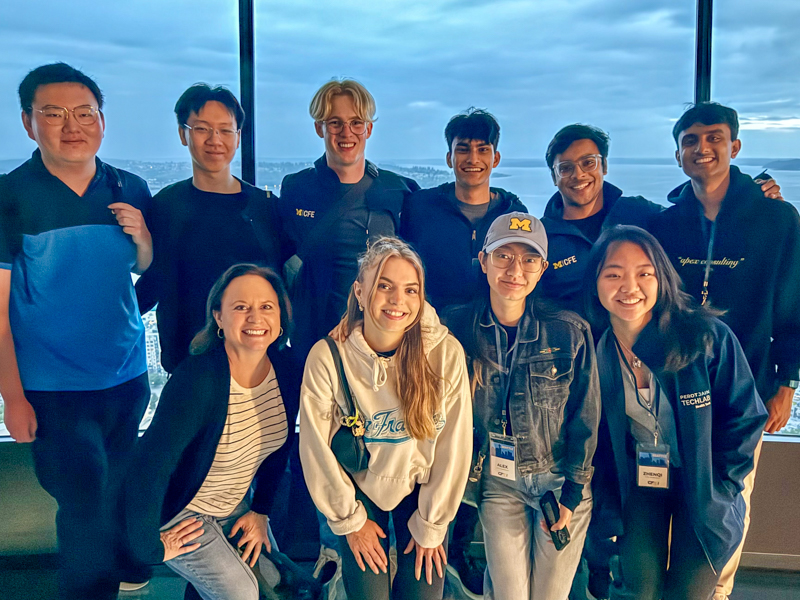
Contributed by: Jonathan Song, Entrepreneurial Leadership Program Cohort 2025, Master’s in Social Work, December 2025
Since starting graduate school, the Entrepreneurial Leadership Program (ELP) has been one of the most meaningful experiences of my learning. I’ve learned so much from professors who made time for us between classes, mentors who shared thoughtful guidance, staff who keep us moving forward, and classmates who inspire me with their drive and work ethic. However, I will say the single most valuable thing I’m taking with me is the entrepreneurial mindset.
Entrepreneurship, I’ve learned, isn’t just a career track. It’s a way of seeing and conceptualizing. You can practice it even if you never pitch a startup or raise a dollar. The mindset shows up in how you approach problems, how you ask for help, and how you learn. In this post, I want to share the parts of an entrepreneurial mindset that have helped me the most—and why they matter even if you’re not pursuing entrepreneurship full-time.
Be hopeful, PURPOSEFULLY
For those of us who aren’t planning to pursue entrepreneurship full-time, the reality is this: the job market is competitive, and there’s no guarantee you’ll land a role that both excites you and pays well. That uncertainty can make it easy to feel overwhelmed and unsure about what direction your life will take. Sometimes you have to choose a major you don’t necessarily enjoy, but it’s easier to get hired. Watching the applicant count climb on LinkedIn while you edit the same resume can make the future feel stuck and small. I used to feel the same way. After participating in ELP, I realized that fixating on one “dream career” can actually hold you back—it’s like trying to cross a river on a bridge that’s already overcrowded and at a standstill. With a bolder mindset and wider vision, you might notice there’s an open shoreline a few steps away where you can build a bridge of your own, one you can design for yourself. The bridge will be good enough to carry you and others to the other side of the river. Sometimes I got so focused on squeezing onto the crowded bridge that I forgot the goal wasn’t the bridge: it was getting to the other side. Sometimes we do similar things in life. We blast out our resumes and hope someone will offer us a position without trying every way to improve them. Sometimes we don’t ask professors or classmates about their projects or express interest in them to see whether we can join, because we feel they don’t need our skills. We don’t ask ourselves “What else could get this done?” but try one path over and over again.
Entrepreneurs don’t mistake long odds for no odds. Even if a possibility looks like 1%, they use the resources at their disposal and expand their 1% to 5%. They proceed knowing failure is possible, and they prepare a Plan B. When something doesn’t work, they treat the miss as learning, not a verdict. They adjust, take another shot, or try another approach based on what they learned from the last attempt. Long story short, they choose hard tasks with a mindset focused on maximizing the chance of success—not the defeated stance of “I’m likely to fail, but I guess I have to try.”

Find Common Ground, Collaboratively
Opportunities aren’t rare; alignment is. During undergrad, I told a lot of professors, “I want to do research projects.” I meant it. But COVID scrambled everything, and—honestly—I didn’t help my case. I shared an interest without a concrete idea. My professors don’t know what I want to do with projects, and they only have a vague idea of my interests. So, unless a professor had a brand-new project and needed an extra hand that same week, my request gave them nothing to react to. The result: I didn’t land on projects.
ELP helped me see what was missing. I didn’t need to be a genius. I needed to be specific, provide enough information for other people to evaluate, and make it easier for them to help me. The first time I tried it, I emailed a researcher in my field. I said: “I noticed your team just published a paper on Topic X. I am really interested in the results of that paper and consider doing another analysis on that topic. Would it be possible for us to schedule a 30-minute remote meeting at your convenience to discuss more and seek your insight?” That shift from a brief statement to naming a common goal and proposing next steps opened the door for me. We met for 30 minutes, discussed common interests, and started a collaboration.
ELP taught me something I wish I’d understood earlier: even in non-entrepreneurial settings like jobs, clinics, nonprofits, or community organizations, people are busy. When you align your ask with their priorities and remove unnecessary friction, collaboration feels sound from the start. You’re not asking for a favor. Instead, you’re offering momentum that can help you both achieve goals. That mindset has helped me in research, class projects, and even student organizations. It’s the difference between “Can I help?” and “I noticed you need some help, here’s what I can do, this is what I want to learn. Can you bring me on board?”

Learn from Experiences, Strategically
Lastly, it’s important to participate in events and learn from experiences. Learn the material in the textbook is important, but many lessons don’t live on the pages. We have to step outside and learn from people—talk to them, ask good questions, and chase ideas worth pursuing. I like going to activities and events, but I’ll admit it can feel daunting to approach people I don’t know. It helps to remember that most attendees didn’t know each other before they came here. They are also here to meet new people and see what others are working on. Starting a conversation can be simple. “What brought you here?” or “How did you hear about this?” can warm up a conversation quickly. Once the conversation opens, it is very likely to connect with kind people and uncover potential opportunities.
Overall, the entrepreneurial mindset has helped me in everyday life. It taught me that most challenges are workable once you find the right method, and it gives me the motivation and courage to keep moving toward my goals. Even if it never leads you to start a company, it can make you an innovator and a leader in your field—someone who builds value, creates options, and pursues a career with a positive, practical mindset.