

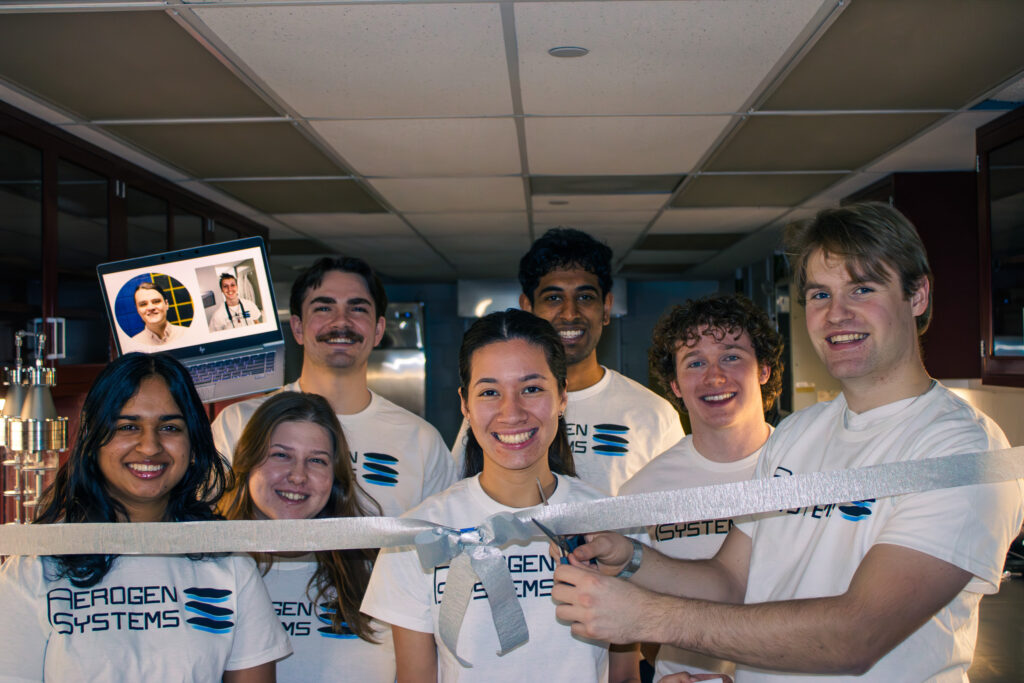
*Author’s note: As of Summer 2026, after clinching the top spot at U-M’s Impact Venture Demo Day (April 2026), Aerogen Systems took its momentum to Silicon Valley (Summer 2026), earning a spot in Y Combinator! Through YC’s world-class network and resources, this student-powered startup is scaling its engineering game and locking in new funding.
When the official email landed announcing Aerogen’ Systems’ large award from the U-M Center for Entrepreneurship’s (CFE) Fuel program, the team couldn’t believe it. “We were genuinely in shock. Getting our full Fuel ask on the first try is a really tall order,” admits Noah Vogel. “Sharing the news with the team, everyone was super excited, and more motivated than ever. Knowing our work matters is incredible validation.”
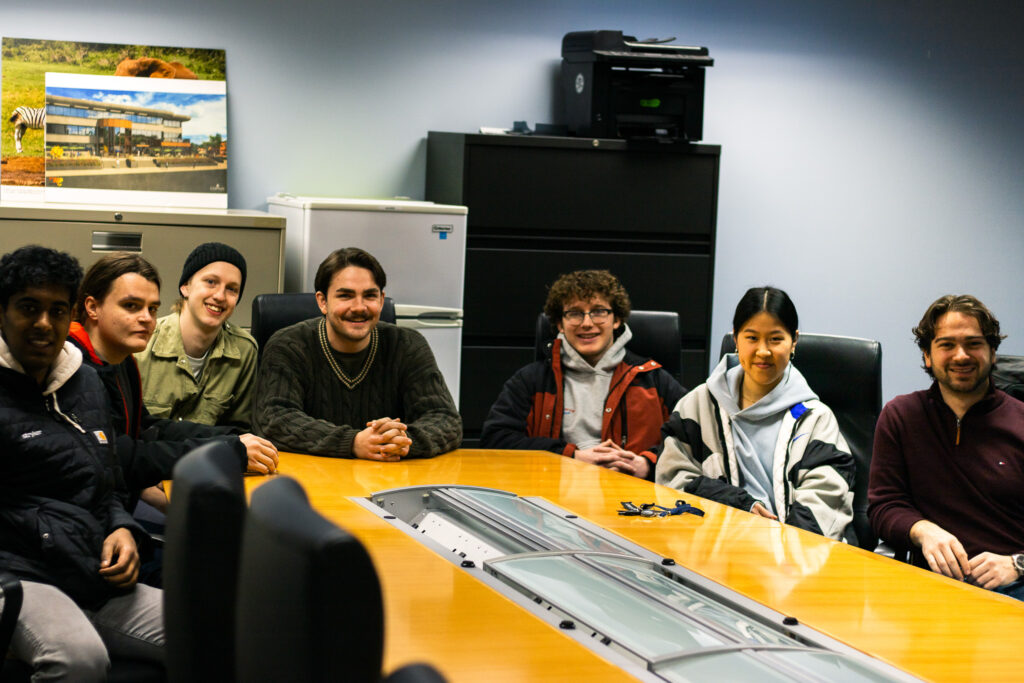
Aerogen’s mission started in a Michigan dorm room, where Noah wrote a NASA proposal as a freshman. This big idea was supported by classmates in the Bioastronautics and Life Support Systems Team (BLISS), a student project within the Climate and Space Engineering department. Over the course of two years, the founders pushed technical boundaries by collaborating across disciplines. Eventually, they brought on more teammates, including a materials expert and a marketing arts student, to create a startup solving real problems, both in space and on Earth.
What’s the challenge?
Air quality. For astronauts and all of us back home. “Current technology relies on activated carbon filters, which just trap toxic compounds and eventually end up in landfills. Nothing has really changed since the ‘50s and ‘60s.” With NASA facing constant filter swaps, Aerogen developed a modular reactor that actually converts toxic compounds, rather than simply relocating the problem.
Their ambitious premise? Bring NASA’s next-gen air filtering technology to everyday HVAC systems. It’s sustainable, long-lasting (a 5–10 year lifespan!), and could drastically reduce the cost and labor of constant filter changes for businesses.
Why Fuel? Why Now?
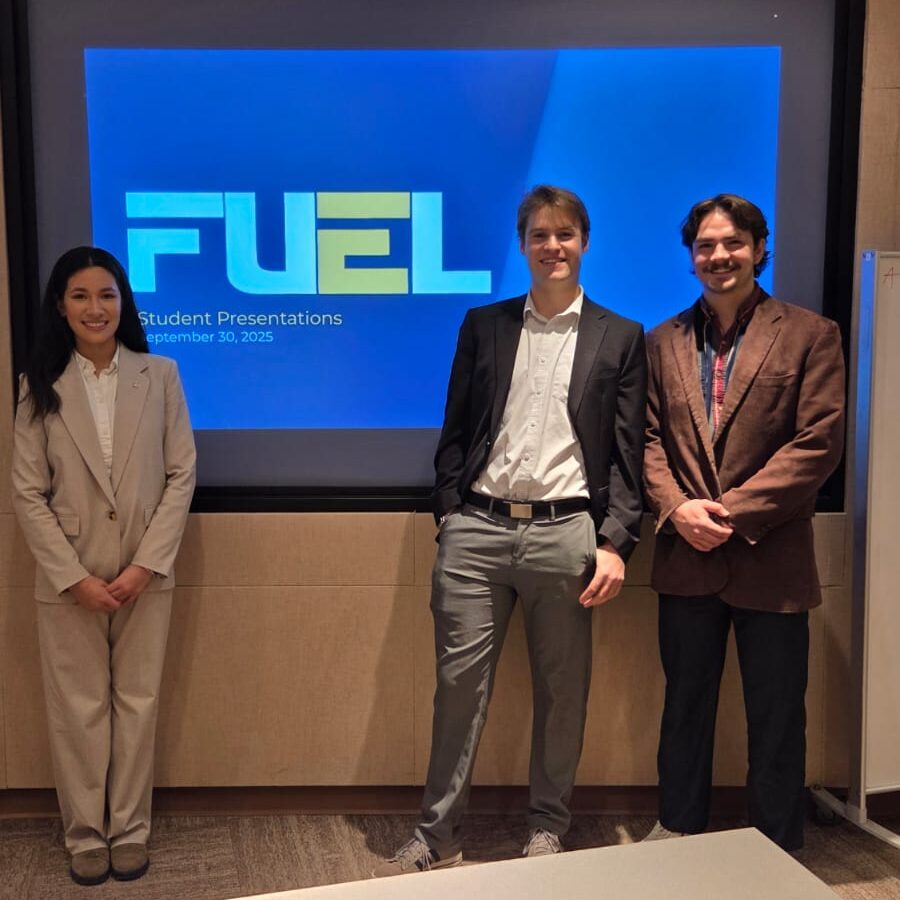
Transforming a student project into a startup requires a serious commitment to funding, mentorship, and next steps. When Noah and the team were asking around campus, “everyone said to go through CFE and the Fuel program,” Noah says. As a deep tech company, Aerogen’s leadership valued Fuel’s SBIR-style structure and expert feedback: “It wasn’t just the funding. The mentorship, the feedback—we met with judges before the finals, and immediately gained guidance that will keep helping us grow.” The team extends special thanks to CFE mentors like Eric Bacyinski and Roger Van Duinen for their guidance along the way.
With the grant money in hand, the team is building their pilot prototype, setting up their permanent lab and office, and gearing up for an MVP rollout by the end of the semester. “Because we’ve been working on this for two years, we knew exactly what we needed to buy. This grant means we can build and test our very first version.”
Every step is informed by real customer interviews and careful design, setting the stage for Aerogen to transition from a NASA project into an independent, impact-driven company.
Their advice for fellow Wolverines?
According to Noah Vogel, it’s all about understanding who you’re selling to.
“The most important thing is to understand your customer base,” he says. “Even when you think you do, you probably don’t. Do some extra digging, figure out exactly who you’re selling to. That impacts all your design specs, and everything that follows.”
Aerogen is proof that big challenges belong in students’ hands, and that interdisciplinary Michigan teams, with the right mindset, community, and support, are helping to shape the future.
Want to see your idea take flight? Apply for Fuel. You could be the next to break barriers and create impact on a large scale!